


News
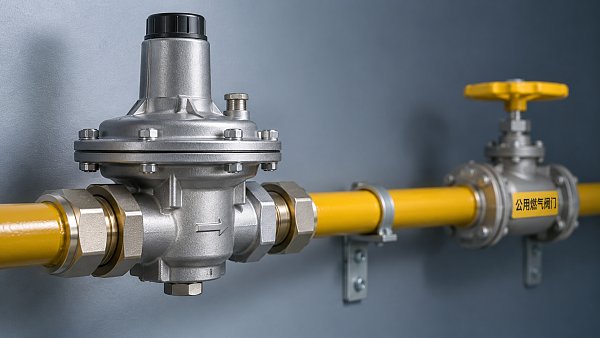
 Suqian Gas Management Regulations to Take Effect Next Year: Rules for Pressure-Reducing Regulators and Public Gas ValvesNov 25, 2026
- Siemens Launches Stainless Steel Smart Valve for AI Data Center Liquid CoolingNov 20, 2026
- Oxford Economics and the European Association of Pump Manufacturers Release the 2026 Global Pump Market OutlookNov 19, 2026
- Hanwha Power Wins Second FSRU Conversion Contract from EnergosNov 17, 2026
- MarketsandMarkets Releases Control Valve Market Report: Focus on AI and Monitoring System IntegrationNov 14, 2026





IMI and TotalEnergies Collaborate to Deploy 3D-Printed Anti-Surge Valve Internals
IMI and TotalEnergies EP Denmark announced a collaboration to deploy 3D-printed anti-surge valve trim. The technology has been validated under severe service conditions, including sour-gas service, and has been installed in the field. The input does not specify when the event occurred; the announcement date given in the summary is October 29, 2026. This news does not mention any new policies or mandatory standards, but the technology’s validation and application may provide a reference for valve manufacturers, purchasers, and equipment integrators assessing materials and manufacturing options.
Anti-surge valve trim validated and installed
According to the input summary, IMI and TotalEnergies EP Denmark announced their collaboration to deploy 3D-printed anti-surge valve trim on October 29, 2026. The technology has been validated under severe service conditions, including sour-gas service, and installed in the field. The summary does not provide details about the materials, validation methods, applicable standards, or operating data following installation.
Potential new considerations for critical-component procurement and manufacturing
Manufacturers may need to address service suitability
For valve and trim manufacturers considering additive manufacturing, a key question may be how to demonstrate that the materials and manufacturing process are suitable for the specific media and operating conditions. Purchasers may be interested in the basis for validation, quality records, and component traceability documentation. Whether these considerations become specific delivery requirements will depend on the project documents and the agreement between the parties.
Procurement and integration may require comparison of technical options
From an industry perspective, purchasers and equipment integrators may consider 3D-printed trim as an option and compare it with alternatives in terms of service suitability, validation documentation, and delivery arrangements. The input does not indicate that procurement rules have changed, nor does it provide sufficient evidence to assess any changes in cost or delivery lead time.
Inspection and after-sales documentation may receive greater attention
If similar components are considered for more projects, inspection service providers and after-sales service teams may need to coordinate further with manufacturers and purchasers on inspection criteria, component identification, and subsequent quality traceability. Specific inspection activities and service arrangements will still need to be confirmed against project requirements.
Items to check when evaluating 3D-printed trim
Check materials against actual service conditions
Relevant companies are advised to check the evidence that the proposed materials are suitable for the actual process media and operating conditions, and to understand the scope covered by existing validation. The summary only states that the technology has been validated under severe service conditions, including sour-gas service; it does not state that it is suitable for all similar conditions.
Confirm technical documentation and project requirements
Purchasers and suppliers can review design, manufacturing, inspection, and traceability documentation during technical discussions, and confirm whether the project has applicable standards, certification, or tender requirements. The input does not specify which certifications the component has obtained, nor does it confirm any new mandatory requirements.
Assess delivery and subsequent maintenance
For projects considering this option, the parties concerned can discuss supplier qualifications, delivery documentation, spare parts, and maintenance arrangements in advance, and verify the allocation of responsibilities against the actual contract. The information currently available is insufficient to assess the specific effects of this technology on delivery lead times or maintenance outcomes.
From field installation to industry rules: developments remain to be seen
This news is best understood as a technology application that has been installed in the field and as a potential signal for future procurement and technical evaluations, rather than as an industry rule change that has already taken effect. Going forward, it will be worth monitoring field operating feedback, whether the scope of validation is disclosed in greater detail, and whether procurement documents or applicable standards set clearer requirements for similar manufacturing methods.
Distinguishing technology applications from changes in rules
This collaboration provides a reference for material selection and manufacturing routes for valve trim used in demanding service conditions. At this stage, companies should conduct validation and comparisons in light of their own service conditions and project requirements, while avoiding treating a single application as an industry-wide standard or a compliance determination.
Source basis and follow-up verification
This article is based on the news headline, event date, and event summary provided by the user. No specific official source link was included in the input, so the information still requires ongoing verification. Relevant sources to monitor include official company announcements, standards organization documents, and reports from authoritative media, as well as field operating feedback, certification practices, and changes to procurement documents.