


News
 Suqian Gas Management Regulations to Take Effect Next Year: Rules for Pressure-Reducing Regulators and Public Gas ValvesNov 25, 2026
- Siemens Launches Stainless Steel Smart Valve for AI Data Center Liquid CoolingNov 20, 2026
- Oxford Economics and the European Association of Pump Manufacturers Release the 2026 Global Pump Market OutlookNov 19, 2026
- Hanwha Power Wins Second FSRU Conversion Contract from EnergosNov 17, 2026
- MarketsandMarkets Releases Control Valve Market Report: Focus on AI and Monitoring System IntegrationNov 14, 2026



Suqian Gas Management Regulations to Take Effect Next Year: Rules for Pressure-Reducing Regulators and Public Gas Valves
On November 24, 2026, Suqian City announced at a press conference that the Suqian Municipal Gas Administration Regulations will take effect on January 1, 2027. The regulations set requirements for the gas appliances and related equipment used by customers, and prohibit unauthorized operation of public gas valves. From an industry perspective, this change warrants attention across gas product manufacturing, procurement, distribution, and service, particularly with regard to specific tasks such as product conformity documentation, delivery verification, and customer notifications.
Regulations Set Requirements for Customer Equipment and Valve Management
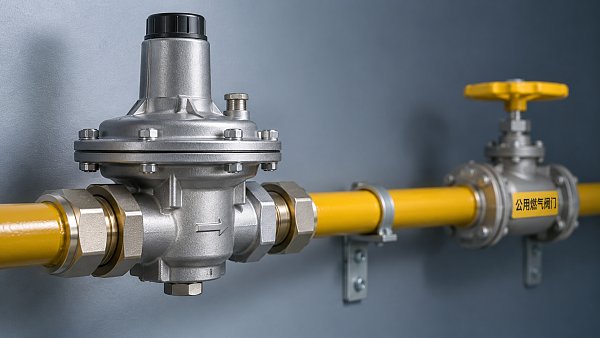
According to the press conference, the Suqian Municipal Gas Administration Regulations were drafted under the leadership of the Suqian Municipal Housing and Urban-Rural Development Bureau and will officially take effect on January 1, 2027. The regulations strengthen customer management by requiring customers to use compliant gas-burning appliances, connecting hoses, pressure regulators, and gas-leak safety protection devices.
The regulations also expressly prohibit unauthorized operation of public gas valves and other such conduct, further strengthening gas safety oversight. This information specifies the effective date, the products and equipment covered, and the prohibition on operating public gas valves.
Implications Across Product Supply and Use
Supply Documentation for Products Such as Pressure Regulators May Face Greater Scrutiny
The inclusion of pressure regulators, connecting hoses, and gas-leak safety protection devices in the requirements for customer use may lead to more detailed verification of product conformity information for relevant manufacturers and suppliers. When selecting products, purchasers may pay closer attention to whether suppliers can provide quality documentation and technical materials corresponding to the specific products.
This does not mean that the information currently available specifies any new certification requirements or a standardized list of required documents. For suppliers, the practical impact may arise during inquiries, product selection, and pre-delivery documentation discussions: whether products meet applicable requirements and whether the supporting documents correspond to the models being delivered are both worth checking in advance.
Procurement and Distribution Should Account for the Full Range of Product Categories
From an industry perspective, the products mentioned in the regulations are not limited to gas-burning appliances; they also include connecting hoses, pressure regulators, and gas-leak safety protection devices. When reviewing products, purchasers and channel operators may need to include these ancillary categories in their verification scope to avoid focusing only on the main appliances and overlooking the completeness of information for other products.
For companies dealing in multiple product categories, different products may be subject to different documentation and applicable requirements. It is advisable to check each product against the specific procurement or sales activity and confirm product information with suppliers. The requirements for on-site verification and the documents to be submitted should still be determined based on verifiable official documents and subsequent implementation guidance.
Delivery and After-Sales Communications May Extend to Safe Use
The prohibition on unauthorized operation of public gas valves also makes communications about product use worth attention. Companies involved in product delivery, installation, or after-sales service can review their customer information materials in light of their business and clearly advise customers not to operate public gas valves without authorization.
The available summary does not specify how valve operation authority is allocated, nor does it provide detailed procedures for installation, repair, or emergency response. When responding to customer questions, companies should verify the official regulations and relevant management requirements, and avoid broadening or narrowing the scope of the regulations on their own.
Companies Can Start by Reviewing Products and Preparing for Delivery
Identify the Products and Ancillary Equipment Covered
Relevant companies are advised to first review the four categories covered—gas-burning appliances, connecting hoses, pressure regulators, and gas-leak safety protection devices—and identify the products they procure, sell, or deliver. For bundled supply arrangements, they can also check the sources and documentation for each ancillary product to ensure that the products actually delivered can be identified.
This review is an internal preparatory measure for companies; it is not a new procedure confirmed by the information provided. Whether a specific product is compliant should be determined by reference to applicable requirements and verifiable supporting documentation, not solely on the basis of the product name or a supplier’s verbal assurance.
Verify Supporting Documents and Procurement Documentation
Purchasers may discuss product models, applicable scope, and existing quality documentation with suppliers before a transaction, and check whether the documents correspond to the products they intend to purchase. Where procurement documents or contractual terms are involved, the parties can specify how documentation is to be provided as needed, reducing communication costs caused by unclear information after delivery.
For materials such as test reports and certification documents, first confirm whether the specific product is subject to the relevant requirements and whether the materials can support a determination of conformity. Since the summary does not list specific certification schemes, standard numbers, or test items, companies should not treat any one type of document as the complete set of evidence expressly required by the regulations.
Review Delivery Arrangements and Customer Guidance
Before the regulations take effect, relevant companies can assess whether their existing supply and delivery processes make it easy to verify product information. If purchasers request additional documents, preparing them may affect communications and delivery arrangements between the parties. However, the specific impact depends on transaction requirements and supplier readiness, so it cannot be assumed that delivery times will necessarily change.
For customer communications, service personnel can prepare clear guidance on using compliant products and the limits on operating public gas valves. For questions not addressed in the summary, they should consult the official regulations and related information rather than assume what procedures apply.
The Effective Date Is Confirmed, but Implementation Details Still Require Verification
This news item sets out a clear effective date for the regulations while also highlighting implementation information that requires further tracking. January 1, 2027, is the disclosed effective date. However, a complete conclusion cannot be drawn from the summary alone about how companies should demonstrate product conformity, whether procurement documents will be revised, or how the relevant parties should implement customer notifications.
Key points to follow up on include whether the verifiable official text of the regulations and related implementation guidance provide further clarification on these issues, and what documentation purchasers, suppliers, and service providers require in their actual business activities. Market feedback may help companies assess whether process changes are necessary, but at this stage, potential changes should not be treated as outcomes that have already occurred across the board.
Respond to Changes by Verifying Requirements and Preparing Documentation
Overall, the Suqian Municipal Gas Administration Regulations address the use of compliant gas appliances and related equipment, as well as the prohibition on operating public gas valves, within the framework of customer management. A prudent approach for companies across the supply chain is to review the relevant product categories and their documentation, while monitoring the official text and subsequent implementation information. Specific procurement, delivery, and service arrangements should still be assessed in light of applicable requirements and actual business needs.
Basis for This Article and Areas for Further Verification
This article is based on the news headline, event date, and event summary provided by the user. No specific link to an official source was included in the input, so further verification will be necessary. Relevant official announcements, information released by competent authorities, and the official text of the regulations can be monitored, along with policy details, guidance on verifying product conformity, changes to procurement documents, and company implementation practices.