


News
 Suqian Gas Management Regulations to Take Effect Next Year: Rules for Pressure-Reducing Regulators and Public Gas ValvesNov 25, 2026
- Siemens Launches Stainless Steel Smart Valve for AI Data Center Liquid CoolingNov 20, 2026
- Oxford Economics and the European Association of Pump Manufacturers Release the 2026 Global Pump Market OutlookNov 19, 2026
- Hanwha Power Wins Second FSRU Conversion Contract from EnergosNov 17, 2026
- MarketsandMarkets Releases Control Valve Market Report: Focus on AI and Monitoring System IntegrationNov 14, 2026
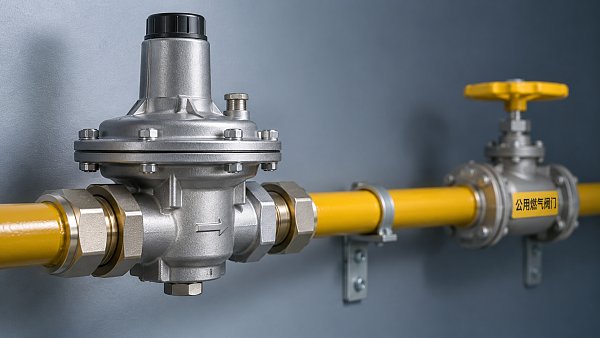





MarketsandMarkets Releases Control Valve Market Report: Focus on AI and Monitoring System Integration
MarketsandMarkets, a market research firm, published its report on control valve market trends and technology roadmaps on November 13, 2026. The report projects that the global control valve market will grow from USD 10.81 billion in 2026 to USD 13.99 billion in 2032. It also identifies the integration of artificial intelligence with industrial valve monitoring systems as a key technology development direction through 2032.
The report presents both a market size forecast and an assessment of technology development. The former outlines the potential growth of the control valve market, while the latter focuses on how valve operating information can be used. These two assessments are related, but market growth does not directly mean wider adoption of artificial intelligence integration solutions. The actual changes will depend on how these technologies are applied.
Market Size Expected to Grow, with Technology Outlook Focused on Monitoring Systems
According to the report's forecast, the global control valve market is expected to increase by USD 3.18 billion between 2026 and 2032, representing growth of approximately 29.4% compared with 2026. This increase reflects the overall forecast change for the period specified in the report. It does not mean that the market will grow at the same rate every year, nor does it indicate the growth rate of different products or application segments.
It is worth noting that USD 13.99 billion is a forecast for the market size in 2032, not an already realized result. For readers following the control valve market, this figure can serve as a reference for understanding the report's outlook, but the extent to which it is realized will need to be assessed against subsequent market performance.
Regarding technology, the report highlights the integration of artificial intelligence with industrial valve monitoring systems. The core idea is not simply to add a feature, but to connect the collection, analysis, and use of valve operating information: monitoring systems provide information for analysis, while artificial intelligence may help identify changes that require attention. The value this can deliver needs to be assessed in light of data quality, actual operating conditions, and how the technology is applied.
From Monitoring Information to Operating Decisions: Application Effectiveness Is Key
For industrial operations, the value of valve monitoring lies not only in obtaining information, but also in whether relevant personnel can understand it in time and take appropriate action. If the integration of artificial intelligence and monitoring systems can effectively identify abnormal changes, operations and maintenance personnel may be able to detect areas requiring inspection earlier and plan maintenance work more precisely.
This potential impact is also subject to clear conditions. Monitoring results need to reflect the actual condition of the valve, and the analysis results need to be understandable and usable by on-site personnel. Otherwise, even if the system collects more information, it may not lead to more effective maintenance decisions. The report identifies a technology development direction; it does not establish that related systems have already achieved a particular level of performance across the industry.
For suppliers of control valves and related monitoring systems, this direction may broaden product discussions beyond the valve itself to include monitoring, data analysis, and system integration. How smoothly the different elements work together will affect the performance of integrated solutions in practical applications. Buyers may pay closer attention to whether monitoring results support operations and maintenance, and how additional analytical capabilities fit into existing workflows.
These considerations do not mean that all use cases will have the same requirements. The information available, maintenance objectives, and system conditions may vary across operating environments. The actual value of an integrated solution therefore needs to be assessed in the context of a specific application and cannot be judged by its technology label alone.
How to Interpret the Signals in the Report
By identifying the integration of artificial intelligence with valve monitoring systems as a key technology development direction through 2032, the report indicates that its view of the control valve market extends beyond equipment volumes to the use of equipment operating information. For industry participants, this assessment offers an area to watch: whether technology solutions can turn monitoring information into useful operational insights.
Market forecasts and technology roadmaps also need to be tracked separately. For the former, the focus is on how subsequent market size compares with the forecast; for the latter, the focus is on the effectiveness of integrated solutions, their conditions of applicability, and issues encountered in actual use. Even if the overall market grows as forecast, this does not directly imply that all related technologies will be adopted at the same pace.
Subsequent public information related to the report, along with the actual application of control valve monitoring and artificial intelligence integration solutions, will help provide a clearer picture of how this technology direction affects industrial operations. At this stage, the cautious conclusion is that the report presents expectations for market growth as well as a technology pathway worth watching; whether the two translate into tangible operational value will depend on their practical application.