


News
 Suqian Gas Management Regulations to Take Effect Next Year: Rules for Pressure-Reducing Regulators and Public Gas ValvesNov 25, 2026
- Siemens Launches Stainless Steel Smart Valve for AI Data Center Liquid CoolingNov 20, 2026
- Oxford Economics and the European Association of Pump Manufacturers Release the 2026 Global Pump Market OutlookNov 19, 2026
- Hanwha Power Wins Second FSRU Conversion Contract from EnergosNov 17, 2026
- MarketsandMarkets Releases Control Valve Market Report: Focus on AI and Monitoring System IntegrationNov 14, 2026


Siemens Launches Stainless Steel Valves to Expand into Data Center Liquid Cooling
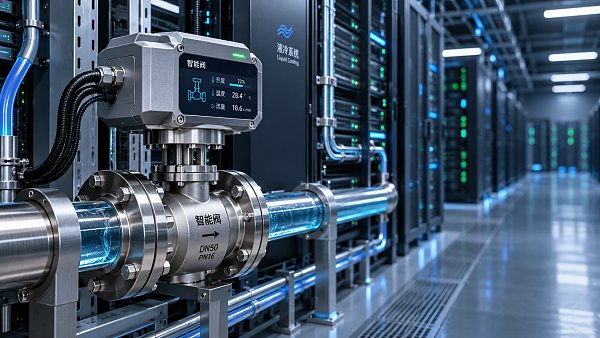
On November 11, 2026, Siemens announced a new stainless steel valve to expand its liquid cooling solutions for AI data centers. Designed for data center rack control, the product combines smart valve technology with digital twin technology to address the high-density heat dissipation needs resulting from increased AI computing capacity.
The focus of this announcement is not only the addition of a new valve material, but also the product’s placement in the specific context of rack control. When liquid cooling systems need to serve high-density equipment, how fluid control components work with rack operating requirements becomes part of the solution assessment.
The Role of Liquid Cooling Components in Rack Control
Racks are an important unit for deploying data center equipment. Valves designed for rack control need to work with other components in the liquid cooling system so that fluid control can adapt to equipment cooling requirements. For solution designers, the focus is therefore not just on the valve itself, but also on how it fits into the overall system.
Siemens’ combination of smart valve technology and digital twin technology indicates that the product is positioned to address both on-site fluid control and digital capabilities. Whether digital twins can deliver practical value for operations management depends on the specific functions they provide and how those functions connect with existing data center systems. The product positioning alone does not support conclusions about energy savings, improved cooling performance, or changes in operating and maintenance costs.
Stainless steel is a material feature explicitly highlighted in this announcement, but the material name alone does not define the full range of conditions for which the product is suitable. Requirements for components may vary across liquid cooling solutions. Specific product specifications, compatible fluids, and system interfaces, among other details, will affect how users assess suitability.
What This Means for Liquid Cooling Solution Selection
For data center construction and operations, this product announcement offers a direction worth considering: rack liquid cooling solutions can be assessed in terms of both fluid control and digital management capabilities. However, whether the product can be included in a specific project still needs to be evaluated against the system design and the product’s actual capabilities.
For liquid cooling system integration, the value of the new valve depends not only on the functions of the individual component, but also on how it works with other equipment and control systems. In particular, the digital twin capabilities need further evaluation to determine whether the information they provide can support actual operations and what is required to integrate them with existing management practices.
For suppliers of related components, the announcement reflects how competition for products serving AI data centers may increasingly focus on specific application scenarios and system compatibility. However, a single product announcement does not in itself indicate that the market landscape has changed, nor does it support conclusions about other suppliers’ product portfolios or changes in orders.
Market Growth Expectations and Product Adoption Should Be Considered Separately
According to forecasts by market research firm Mordor Intelligence, the global liquid cooling market is expected to see significant growth between 2026 and 2031. This forecast provides market context for understanding companies’ interest in liquid cooling, but it describes the overall market trend. It cannot be directly equated with the sales performance of a particular valve, nor does it indicate the adoption progress of any specific project.
In the short term, the industry is more likely to observe product information and the application scenarios the product targets. Assessing its broader impact will require attention to subsequently disclosed product specifications, digital functions, and real-world application information, as well as whether these capabilities meet the system requirements of different data centers.
Based on the direction disclosed so far, Siemens is bringing stainless steel valves, rack control, and digital technology together in a single liquid cooling application. The extent of any practical improvement will depend on the product’s specific capabilities, system integration approach, and operating conditions.