


News
 Suqian Gas Management Regulations to Take Effect Next Year: Rules for Pressure-Reducing Regulators and Public Gas ValvesNov 25, 2026
- Siemens Launches Stainless Steel Smart Valve for AI Data Center Liquid CoolingNov 20, 2026
- Oxford Economics and the European Association of Pump Manufacturers Release the 2026 Global Pump Market OutlookNov 19, 2026
- Hanwha Power Wins Second FSRU Conversion Contract from EnergosNov 17, 2026
- MarketsandMarkets Releases Control Valve Market Report: Focus on AI and Monitoring System IntegrationNov 14, 2026
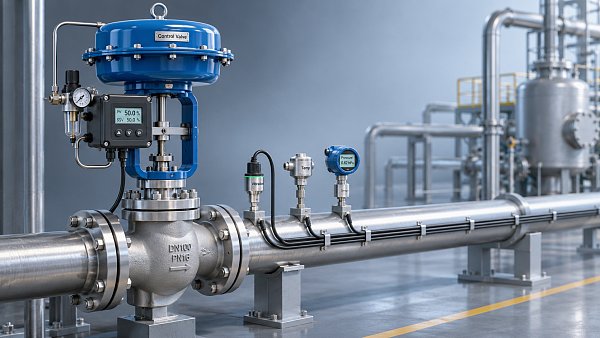

Siemens Launches Stainless Steel Smart Valve for AI Data Center Liquid Cooling
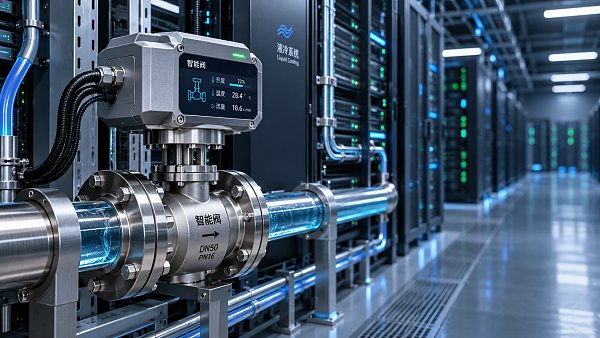
Siemens has introduced a stainless steel smart valve for direct-to-chip liquid cooling in AI data centers, bringing rack-level differential pressure control and compatibility with water-glycol coolant into its product application portfolio. The event date is marked as unspecified in the input, while the summary separately lists November 19, 2026; the relationship between these dates still needs to be verified. The information available does not indicate that any new policies, regulations, or mandatory standards have been introduced. From a procurement and delivery perspective, this product development is worth the attention of equipment integrators, buyers, and engineering service providers, particularly regarding whether the related technical requirements will be incorporated into project documentation.
Stainless Steel Smart Valve for Rack-Level Cooling
According to the information provided, Siemens has expanded its liquid-cooling product portfolio with the introduction of a stainless steel smart valve. The product is designed for direct-to-chip rack cooling in AI data centers. It can maintain stable differential pressure in rack-level control, adapt to hardware changes, and support water-glycol coolant.
The input describes this product as an advancement in the application of control valve technology to liquid cooling for AI infrastructure. Apart from the product positioning and functions outlined above, the summary provides no specific specifications, certification information, applicable standards, or project delivery details. It also does not indicate any changes to regulatory or trade rules.
How Technical Requirements May Flow Through Liquid-Cooling Projects
Buyers: Turn Functional Descriptions into Comparable Criteria
In evaluating rack liquid-cooling equipment, buyers may need to assess differential pressure control, coolant compatibility, and adaptability to hardware changes against the actual project conditions. Whether these become procurement requirements depends on the project documentation and technical review; they cannot be considered industry-wide rules based solely on the functions of a single product.
During the quotation or tendering stage, buyers can ask suppliers for technical documentation sufficient to clarify the scope of applicability, and check whether the relevant claims align with project requirements. If the documentation states only “stainless steel” or “smart valve” without specifying the compatible coolant and control conditions, there may be no common basis for comparing different solutions.
Equipment Integrators: Consider Interfaces and Control Boundaries
From an integration and delivery perspective, rack-level control involves matching the valve with the overall cooling solution. Integrators may need to verify the valve’s suitability for the intended coolant and operating conditions, as well as how its control functions will work with other equipment in the project. Whether the existing control settings remain suitable after hardware configuration changes is also worth raising during solution reviews.
These checks are recommendations for technical verification at the project level. The input does not specify interfaces, control methods, or performance limits. Therefore, it is not possible to conclude that the product can be directly adapted to any rack, nor to infer that integrators already need to change their current delivery processes.
Manufacturing and Service: Documentation Consistency May Draw Attention
For companies involved in equipment manufacturing, engineering implementation, and after-sales service, consistency between product descriptions, technical documentation, scope of supply, and delivery documents may affect procurement communications and the allocation of responsibilities. In particular, when a project uses water-glycol coolant, service personnel may need to verify the applicable conditions against confirmed documentation rather than relying on the product name alone.
If a project involves testing, certification, or cross-border procurement, the parties involved can also check which supporting documents the procurement documentation requires. The current summary does not specify any certifications, test items, or trade requirements. Whether such documents are needed should be determined based on the actual transaction and applicable requirements.
What to Verify from Selection Through Delivery
Confirm the Coolant and Operating Conditions
Procurement and technical teams are advised to verify with the supplier whether the stated compatibility with water-glycol coolant covers the conditions planned for the project, and to assess any usage limitations based on the supplier’s documentation. The summary does not provide more detailed coolant parameters, so this statement should not be extended to mean that the product is suitable for every mixture ratio and operating scenario.
Check Differential Pressure Control and Hardware Adaptability
Stable rack-level differential pressure and adaptability to hardware changes are two key points in this product announcement. During product selection, project teams may define the conditions they need to control, ask the supplier how the relevant capabilities are defined, and, where feasible, verify them against the project solution. The specific verification methods and acceptance criteria still need to be determined by the parties to the transaction in line with the project documentation.
Review Documentation, Certifications, and Alternatives
Companies can identify in advance their documentation requirements, including technical specifications, supplier declarations, and testing or certification documents, and verify that these correspond to the model being considered and its intended conditions of use. If the current solution needs to be adjusted, they can also assess whether other products meet the same set of project requirements. Whether an alternative can be used still depends on technical verification and buyer approval, and cannot be determined based solely on material or functional descriptions.
Coordinate Procurement Arrangements with After-Sales Documentation
Procurement arrangements for rack liquid cooling may also warrant attention to the clarity of the scope of supply, delivery documentation, and ongoing technical support. For potential hardware changes, the parties to a project can agree in advance on how to verify suitability and update the relevant documents. The input provides no delivery lead times or after-sales terms; these need to be confirmed separately for the specific procurement.
Can a Product Signal Become a Project Rule?
At present, this announcement is best understood as a product application development and a market signal for project procurement and technical review, rather than as an implemented regulatory rule. The fact that a product has a particular function does not automatically mean buyers must adopt it, nor does it establish that the industry has a uniform approach to certification or delivery.
Points to watch going forward include whether the supplier publishes more complete product documentation, whether procurement and tender documents specify requirements for rack-level differential pressure control and coolant compatibility, and how project implementers report on verification and use. If relevant standards, certifications, or trade requirements are updated, their applicability should be assessed against the official documents and their scope; a product announcement should not be equated directly with a rule taking effect.
Assess the Actual Impact Against Project Conditions
The introduction of this stainless steel smart valve provides a specific point of reference for assessing rack-level control and water-glycol compatibility in liquid-cooling equipment selection. The actual impact will depend primarily on project technical documentation, the supporting evidence the supplier can provide, and the verification results of the parties involved. For now, the prudent approach is to treat the announcement as a reference for evaluating procurement and delivery conditions, while continuing to verify whether any applicable rules change.
Basis of This Article and Areas for Further Verification
This article is based on the news headline, event date, and event summary provided by the user. The input marks the event date as unspecified, and the relationship between that date label and November 19, 2026, listed in the summary, remains to be verified. No specific link to an official source was provided in the input, so continued verification is still required.
Further checks may cover official product announcements, documents from relevant standards organizations, regulatory information, and industry feedback. It is also worth monitoring whether relevant project tender documents, certification practices, or company delivery practices change. These source types are suggested only as avenues for verification; this does not mean that the corresponding documents have been obtained or verified for this article.