


News
 Suqian Gas Management Regulations to Take Effect Next Year: Rules for Pressure-Reducing Regulators and Public Gas ValvesNov 25, 2026
- Siemens Launches Stainless Steel Smart Valve for AI Data Center Liquid CoolingNov 20, 2026
- Oxford Economics and the European Association of Pump Manufacturers Release the 2026 Global Pump Market OutlookNov 19, 2026
- Hanwha Power Wins Second FSRU Conversion Contract from EnergosNov 17, 2026
- MarketsandMarkets Releases Control Valve Market Report: Focus on AI and Monitoring System IntegrationNov 14, 2026

Oxford Economics and the European Association of Pump Manufacturers Release the 2026 Global Pump Market Outlook
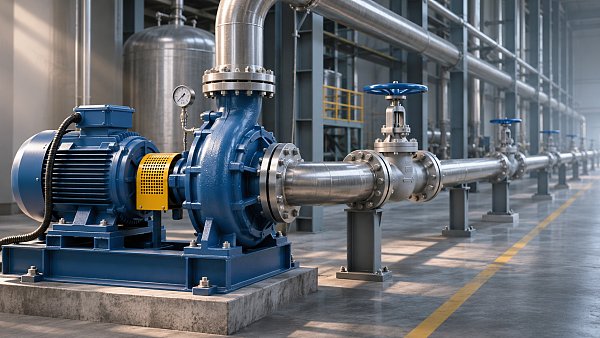
On November 18, 2026, Oxford Economics and the European Association of Pump Manufacturers (Europump) jointly released the 2026 Global Pump Market Outlook. The report estimates that global pump consumption value grew by 1.3% in 2025 to reach USD 60.9 billion. It forecasts that global pump demand will grow by 2.6% in 2026, bringing the market to USD 62.5 billion.
The report identifies lower tariffs and economic momentum as factors supporting demand growth, while noting that geopolitical tensions and high energy prices will limit the market’s maximum growth. The key signal from this outlook is that the global pump market is still expected to grow, but whether that growth materializes depends on how demand-supporting factors interact with cost pressures and external conditions.
Growth expectations rise from USD 60.9 billion to USD 62.5 billion
According to the report’s estimates, global pump consumption value reached USD 60.9 billion in 2025, up 1.3% from the previous year. The projected market size for 2026 is USD 62.5 billion, with demand expected to grow by 2.6%. The two figures differ by USD 1.6 billion, and the projected growth rate is also higher than the estimated rate for 2025.
This comparison helps explain the report’s assessment: it expects the market to continue expanding after growing in 2025, with a higher growth rate. However, the 2025 figure is an estimate, while the 2026 figure is a forecast; both should be understood according to how the report presents them. USD 62.5 billion is an outlook for the market’s full-year size, not a consumption value that has already been realized.
In addition, the report summary refers to consumption value, demand growth, and market size. For readers focused on specific business activities, changes in value can reflect the report’s view of the overall market, but should not be used to directly infer changes in pump product sales volumes or to apply the global growth rate to a particular product or individual company.
How tariffs and economic momentum affect demand
The report expects lower tariffs and economic momentum to drive growth in global pump demand in 2026. In terms of how these factors may work, if tariff changes reduce the costs associated with relevant transactions, buyers’ spending outlook may improve accordingly, helping support demand. Changes in economic momentum may also affect procurement plans and the timing of demand realization.
However, the impact of lower tariffs does not mean that the cost of every transaction will fall by the same amount. The specific impact will still depend on the scope of the tariff changes and the actual terms of the relevant transactions. For pump manufacturers and buyers, the global market forecast offers a reference point for understanding demand trends, while business decisions still need to take account of their own transaction conditions.
The effects of economic momentum on demand may also take time to emerge. Whether procurement demand translates into actual transactions depends both on buyers’ plans and on prices and other cost conditions. Therefore, an expected increase in market size does not mean that all orders will be placed at the same time or that all participants will achieve the same rate of growth.
Energy prices and geopolitical risks may constrain growth
The report also cautions that geopolitical tensions and high energy prices will limit the market’s maximum growth. This means that even if tariffs and economic momentum provide support, external pressures may still weaken the growth effect. The report’s 2.6% forecast reflects a combination of relevant factors and should not be interpreted based on any single driver alone.
Energy prices are one variable to watch when assessing cost pressures. If related costs remain high, both the supply and procurement sides of the pump market may come under pressure: suppliers need to monitor cost changes, while buyers may reassess spending and procurement timing. Whether cost pressures feed through to transaction prices, and how much they affect demand, will also depend on actual market conditions.
Geopolitical tensions add uncertainty to the market outlook. Their impact may vary across transactions, so the global growth forecast should not be interpreted as meaning that all business activities will improve in tandem. For the companies concerned, the report is best used as one reference for setting demand expectations, rather than as a guarantee of specific orders or revenue.
Going forward, it will be worth monitoring the actual scope of tariff changes, energy price trends, and updates to global pump consumption value and demand growth. If the conditions supporting demand continue to improve, market performance may come closer to the report’s expectations. If cost pressures or external challenges intensify, growth may be further constrained.