


News
 EU RoHS Exemption Revision Takes Effect, Supplementary Declaration Requirements for the Export of Leaded Copper Alloy ValvesJul 29, 2026
- EU REACH Adds New SVHCs, Increasing Compliance Pressure on Valve Sealing MaterialsJul 28, 2026
- EU REACH Adds New SVHCs, Putting Industrial Valve Seals Under Compliance ReviewJul 26, 2026
- The United States’ Preliminary Countervailing Duty Determination on Industrial Valves from China Sends an Enforcement SignalJul 25, 2026
- New EU CE Rules Take Effect: Industrial Valve Certification Requirements RaisedJul 24, 2026

EU REACH Adds New SVHCs, Increasing Compliance Pressure on Valve Sealing Materials
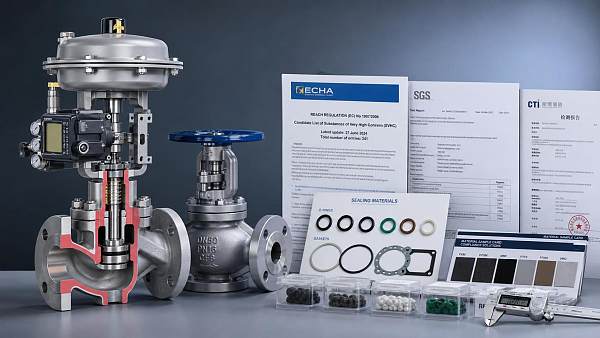
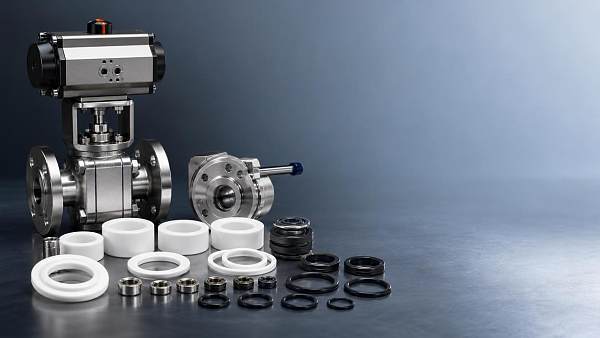
On July 27, 2026, in connection with the latest adjustments to the EU REACH Regulation, the ECHA added three new substances to the SVHC Candidate List. These include degradation by-products of fluoropolymers that may be used in valve seats, O-rings, and actuator seals. This change warrants close attention from the industrial valve supply chain because it is directly related to SCIP notifications, supply chain information disclosure, and compliance assessments of existing inventory materials for products exported to the EU. Its impact extends beyond material selection itself to procurement, delivery, and external declarations.
Key Information Confirmed in This Candidate List Update
The confirmed fact is that the European Chemicals Agency (ECHA) officially added three new substances to the SVHC Candidate List on July 27, 2026. The additions include degradation by-products of fluoropolymers used for valve seats, O-rings, and actuator seals. Based on the information provided, this adjustment will directly affect the conformity declarations (SCIP notifications) and supply chain information disclosure obligations for industrial control valves, control valves, and actuators exported to the EU. At the same time, importers must complete compliance assessments of existing inventory materials by October 31, 2026.
The Impact Is Extending to Materials, Documentation, and Delivery Chains
The Completeness of Export Product Documentation Requires Rechecking
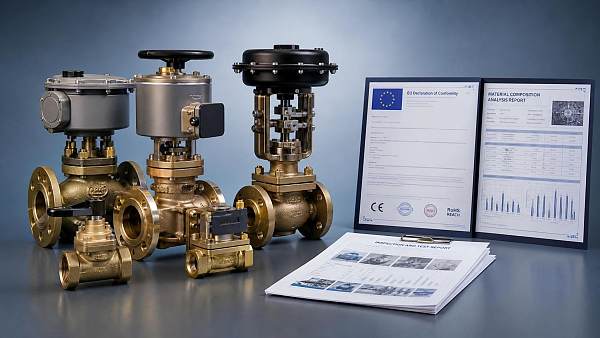
For export companies serving the EU market, the impact concerns not only the sealing components themselves, but also whether information on relevant materials in complete equipment can be accurately identified, organized, and reflected in external compliance documents. Once industrial control valves, control valves, or actuators contain relevant materials, their SCIP notification and supply chain information disclosure obligations need to be rechecked. The business focus will be on reviewing material composition, identifying component levels, and preparing updates to existing conformity declarations.
Coordination Pressure on Procurement and the Supply Chain Is Increasing
For raw material procurement companies, processing and manufacturing companies, and supply chain participants responsible for procuring supporting sealing components, this change will shift pressure upstream to the acquisition of supplier information and material confirmation. Components such as valve seats, O-rings, and actuator seals are often located in key but non-obvious positions within complete equipment structures. If upstream material information is insufficient, subsequent disclosure obligations and inventory assessments may be affected. The practical change requiring attention is whether the supply chain can promptly provide material descriptions and supporting documents related to the newly added SVHCs.
Import and Distribution Stages Need to Focus on the Inventory Compliance Deadline
For importers and distribution channels, the requirement to complete compliance assessments of existing inventory materials by October 31, 2026 means that inventory management and sales arrangements need to be handled more cautiously. For relevant products already in stock, awaiting delivery, or about to enter the EU market, material-level compliance confirmation may need to be completed before subsequent circulation and delivery schedules are determined. The key issue is not to presume the market outcome, but that the regulatory change has imposed more direct time constraints on inventory disposition and document verification.
Supporting Service Organizations Will Be More Involved in Document and Information Verification
From the perspective of business responsibilities, certification-related companies, testing service organizations, and after-sales support providers may also be affected indirectly. This is because, when companies handle SCIP notifications, supply chain information disclosure, and existing inventory assessments, they often need to cross-check material information, technical documents, and historical delivery records. The analysis indicates that these service links will need to provide more support around material identification, document consistency, and traceability chains, rather than remaining limited to routine product document reviews.
Which Practical Changes Should Receive More Attention at This Stage?
First Verify Whether Sealing Materials Fall Within the Newly Added Scope of Concern
From a practical perspective, companies should first focus on whether the materials used in valve seats, O-rings, actuator seals, and other such parts are associated with the degradation by-products of fluoropolymers covered by the newly added SVHC Candidate List. The input information does not provide more detailed implementation criteria. Therefore, this step is currently better understood as an internal screening and material identification exercise, rather than as an assumption that a uniform handling approach has already been established.
Check SCIP Notifications and Supply Chain Disclosure Documents Simultaneously
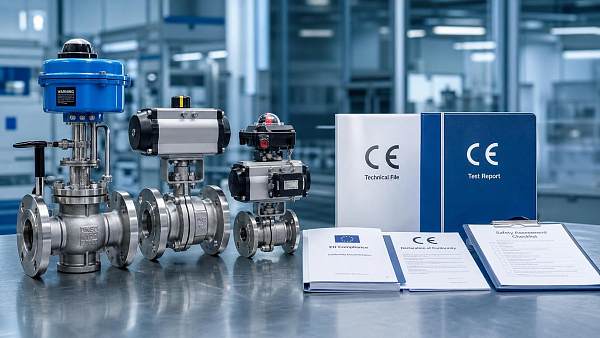
For industrial control valves, control valves, and actuator products that have already been exported or are being prepared for export to the EU, companies need to focus their review on existing conformity declarations, SCIP notification documents, and supply chain information provided to customers or importers. The practical impact of this change, based on current observations, is that document packages previously regarded as stable may need to be re-verified for consistency with the newly added list.
Inventory Assessment and Delivery Arrangements Must Take the Deadline into Account
The known information clearly states that importers must complete compliance assessments of existing inventory materials by October 31, 2026. Accordingly, companies involved in the EU market need to incorporate this deadline into their business schedules when arranging shipments, stocking, and the handling of products in inventory. The issue requiring greater attention is whether inventory assessments will affect delivery schedules, customer communication, and internal approval processes. These changes still need to be continuously observed in light of subsequent implementation.
Technical Documents and Supplier Information Must Remain Traceable
At the operational level, companies should also pay attention to whether technical documents, material declarations, information issued by suppliers, and related product materials are consistent with one another. Since this adjustment is directly related to supply chain information disclosure obligations, future external explanations, customer inquiries, and internal reviews may all depend more heavily on the completeness of the document chain. The focus is not on adding generalized management actions, but on establishing verifiable and traceable documentation for the affected components.
This Appears More Like an Implemented Enforcement Signal
The analysis indicates that this information should not be understood merely as an ordinary list update, but rather as an enforcement signal that has already created business constraints. This is because the information provided identifies not only the regulatory change involving the addition of new SVHCs to the Candidate List, but also specific areas of impact, including SCIP notifications, supply chain information disclosure, and compliance assessments of inventory materials. However, based on current observations, how companies define the scope of affected products, update their documentation, and implement the requirements across different transaction stages still requires continued attention to subsequent official statements, market implementation practices, and industry feedback.
For the Valve Industry, the Change Has Moved from the Regulatory Level to the Business Level
Overall, the significance of the EU REACH addition of new SVHCs to the Candidate List for industrial valves, actuators, and related products lies in the fact that compliance requirements have been applied more directly to routine business areas such as sealing materials, external declarations, and supply chain disclosure. At present, this is more appropriately understood as an implemented regulatory change with a clear deadline. However, the specific depth of implementation and the pace of industry response still need to be assessed rationally in light of subsequent verification results and market feedback.
Basis of This Article and Directions for Further Verification
This article was generated based on the information title, event date, and event summary provided by the user. The confirmed facts on which the content is based are limited to the information in that input. For events of this type, further verification would normally need to incorporate official announcements, information released by regulatory authorities, customs or trade authorities, industry associations, standards organizations, and authoritative media reports. Since no specific official source link was provided in the input, the relevant links and more detailed implementation criteria still require subsequent confirmation. At the same time, continued observation is necessary regarding policy details, certification implementation practices, changes to tender documents, industry feedback, and the actual implementation of the requirements by companies.