


News
 China raises the export tax rebate rate for vortex pumps to 14%, affecting overseas procurement costs from October 2026Aug 17, 2026
- New EU Regulations Take Effect: EPD Declaration Required Before Customs Clearance for Imported Industrial ValvesAug 16, 2026
- Qingdao Fluid Machinery Exhibition Day One Focuses on the CE/UKCA-Compliant Valve Supply ChainAug 15, 2026
- The Strong Growth of Construction Machinery Exports Drives Rising Demand for Pump and Valve Supporting CertificationsAug 14, 2026
- The EU will implement dual-standard CE requirements for industrial valves starting in OctoberAug 13, 2026


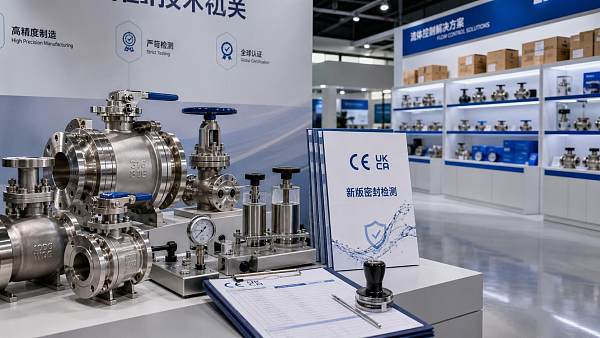


EU REACH Adds New SVHCs, Putting Industrial Valve Seals Under Compliance Review
On July 25, 2026, the latest adjustments to the EU REACH Regulation once again transmitted their impact to the industrial equipment supply chain. After the European Chemicals Agency (ECHA) added five new substances to the SVHC Candidate List, industrial valves, actuators, and control valve components involving fluoropolymer additives and nickel-based sealing lubricant ingredients face more direct material identification and information declaration requirements in exports to Europe. For exporters, importers, distribution channels, and business functions responsible for procuring sealing components and actuators, this development deserves attention because it is directly connected with the notification obligations and SCIP database update requirements taking effect in October 2026.
What clear signals have been released by this list adjustment
The confirmed information shows that on July 25, 2026, the European Chemicals Agency (ECHA) officially added five new substances to the Candidate List of Substances of Very High Concern (SVHC). The additions cover fluoropolymer additives and nickel-based sealing lubricant ingredients.
According to the summary provided, the adjustment directly affects imported industrial valves, actuators, and control valve components containing relevant materials. From October 2026, products exported to the EU that contain SVHC substances above 0.1% will be subject to notification obligations and require updates to the SCIP database.
For IKATE VALVE's overseas distributors and importers, the areas specifically identified as requiring priority attention include orders involving PTFE, FPM/NBR seals, and high-temperature actuators. Relevant operations should initiate material declarations and compliance verification in advance.
The initial impact will fall on material identification, trade declarations, and order execution
The pressure to prepare documentation for export and import procedures will increase
The analysis indicates that exporters and importers directly serving the EU market will be affected first because the regulatory changes point to specific declaration actions. For industrial valves, actuators, and control valve components containing relevant materials, the business focus is no longer limited to completing routine delivery. It also includes determining whether relevant SVHC substances exceed 0.1% in the products and preparing the information required for notifications and SCIP updates accordingly. For trade-related procedures, consistency among material declarations, product composition descriptions, and declaration information will become more important.
The procurement and manufacturing sides need to review sealing and lubrication-related materials
From an industry perspective, raw material procurement companies and processing and manufacturing companies are affected mainly because the information explicitly identifies PTFE, FPM/NBR seals, and ingredients related to nickel-based sealing lubricants. For orders involving these components or materials, procurement teams need to confirm earlier whether suppliers' material declarations are complete, while manufacturing teams need to recheck existing bills of materials and assembly plans to avoid discovering compliance information gaps only before shipment, which could in turn affect delivery schedules.
Distribution channels and overseas service chains need to update their compliance understanding in sync
Channel distribution companies, overseas distributors, and after-sales service operations may also be affected. This is because responsibility for product information after entry into the EU market does not rest solely with the manufacturer; distributors and importers generally need to cooperate in handling product material information, order documents, and compliance statements. In particular, if material identification for high-temperature actuators and related components is insufficient at an early stage, mismatches in documentation may subsequently emerge during order confirmation, goods acceptance, or the management of after-sales replacement parts.
Testing and compliance service needs will become more concentrated in key product categories
For testing service providers and certification-related companies, the current focus should be on the possibility that customer needs will become concentrated around key materials and components. Although the input information does not provide more detailed implementation criteria, it is reasonable to determine that verification of seals, lubricant ingredients, and related technical documents will become a more common service demand for a period of time. For clients commissioning such services, whether testing reports, material declarations, and technical documents can corroborate one another will directly affect subsequent external declarations and the preparation of delivery documentation.
Which practical actions require closer attention at this stage
First verify the material declarations for existing orders
The analysis indicates that active orders already involving the EU market, especially projects containing PTFE, FPM/NBR seals, and high-temperature actuators, should promptly verify whether material declarations are complete and capable of supporting SVHC identification. The focus is not on supplementing documents in a general manner, but on conducting a targeted review around the material categories explicitly identified in the summary.
Bring preparation for notification obligations and SCIP updates forward
From the perspective of implementation timing, the notification obligations and SCIP database update requirements taking effect in October 2026 mean that companies need to move documentation preparation forward to before shipment or even before order acceptance. At present, this is more appropriately understood as a compliance preparation task with a defined time boundary, rather than an ancillary matter that can wait until delivery is approaching.
Check the wording of technical documents and external-facing files at the same time
Companies need to pay attention not only to internal material assessments, but also to whether externally used technical documents, product descriptions, order materials, and compliance declarations remain consistent. If discrepancies exist among material identification, product descriptions, and declaration information, they may subsequently affect importation, notification, or customer review processes. Since the input does not provide more specific implementation details, this should be understood as a direction for advance verification rather than a predetermined outcome.
Pay attention to the information transfer mechanism between distributors and importers
For IKATE VALVE's overseas distributors and importers, the summary has clearly indicated that material declarations and compliance verification should be initiated in advance. In practice, attention needs to be paid to whether information is transferred promptly among distributors, importers, and manufacturers, whether relevant sealing components and actuator configurations have been identified for key orders, and whether the subsequent division of responsibilities is clear.
This is more like a regulatory transmission that has already reached the implementation level
From an editorial perspective, this information should not be understood merely as news of a list update. It is more like an implementation signal that has already begun to reach specific industrial valve categories. This is because the information provided includes not only the fact that new SVHC substances have been added, but also clear time points, notification obligations, and SCIP update requirements, requiring companies to focus on the concrete implementation of order, material, and documentation chains.
At the same time, continued observation is still necessary. Follow-up attention should focus on how the official wording is applied in practice, the depth of verification companies conduct for key product categories, and whether tender documents, procurement requirements, and customer audits will reflect this change more quickly. At this stage, the more appropriate assessment is that this is not a long-term signal confined to the policy level, but a compliance development that already needs to be included in business preparation checklists.
For the valve supply chain, the priority is not broad interpretation but promptly calibrating the documentation chain
Overall, the addition of five substances to the SVHC Candidate List under the REACH Regulation will initially affect industrial valves, actuators, and control valve components in terms of material identification, declaration preparation, and order compliance review. For businesses involving PTFE, FPM/NBR seals, and high-temperature actuators, this development is better understood as a compliance requirement with a clear implementation direction, rather than merely a signal of market sentiment.
From a rational perspective, there is no need to exaggerate its broader impact at this stage, but it should not be regarded as an ordinary regulatory update either. For the companies concerned, the prudent approach is to continue treating material declarations, SVHC assessments, SCIP update preparation, and consistency of upstream and downstream documentation as immediate priorities for EU export operations.
Basis of this article and directions for subsequent verification
This article was generated based on the information title, event date, and event summary provided by the user. The confirmed facts are limited to the content provided. For such events, ongoing verification can generally be conducted by consulting information released by regulatory authorities, official announcements, customs or trade authorities, industry association information, documents from standards organizations, and reports from authoritative media outlets.
It should be noted that no specific official source link was provided in the input, so this article does not correspond to any specific external link citation. Items requiring continued attention include whether policy details will be further clarified, whether certification or compliance implementation criteria will be updated, whether tender documents and procurement requirements will be adjusted accordingly, and whether industry feedback and company implementation practices will change.