


News
 EU RoHS Exemption Revision Takes Effect, Supplementary Declaration Requirements for the Export of Leaded Copper Alloy ValvesJul 29, 2026
- EU REACH Adds New SVHCs, Increasing Compliance Pressure on Valve Sealing MaterialsJul 28, 2026
- EU REACH Adds New SVHCs, Putting Industrial Valve Seals Under Compliance ReviewJul 26, 2026
- The United States’ Preliminary Countervailing Duty Determination on Industrial Valves from China Sends an Enforcement SignalJul 25, 2026
- New EU CE Rules Take Effect: Industrial Valve Certification Requirements RaisedJul 24, 2026


EU RoHS Exemption Revision Takes Effect, Supplementary Declaration Requirements for the Export of Leaded Copper Alloy Valves
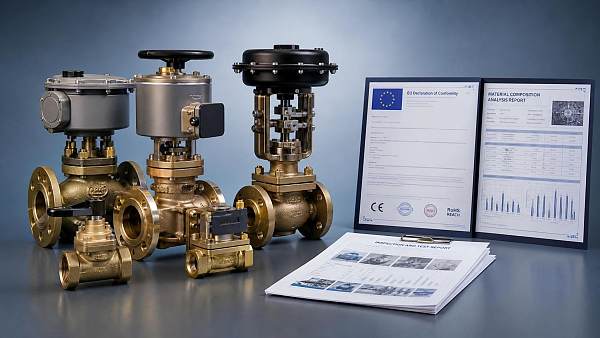
On July 28, 2026, the European Commission officially implemented Regulation (EU) 2026/1234, revising the exemption provisions for lead in copper alloys under the RoHS Directive and further clarifying the accompanying document requirements for the export to the EU of industrial valves, actuators, and control valve components containing more than 0.1% lead. For valve manufacturers, exporting companies, purchasers, and supply chain participants responsible for re-export and delivery, the key point of this change lies not only in the material restriction provisions themselves, but also in the fact that compliance declarations and material composition test reports have become necessary documents in the actual shipping process.
Rule changes clarified in this revision
According to the information provided, Regulation (EU) 2026/1234 officially entered into force on July 28, 2026, revising the exemption provisions concerning lead content in copper alloys under the RoHS Directive. The exemption was originally scheduled to remain in effect until June 30, 2026.
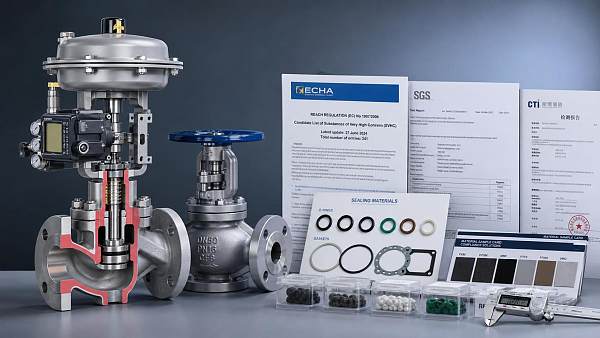
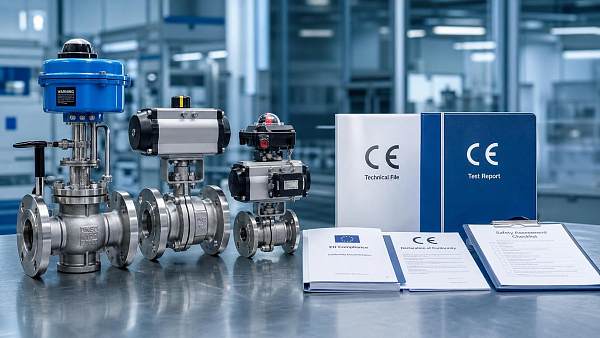
The new requirement introduced by the revision is that, from July 28, 2026, all industrial valves, actuators, and control valve components containing more than 0.1% lead in copper alloys and exported to the EU must be accompanied by a technical Declaration of Compliance (DoC) signed by the manufacturer, as well as a material composition test report.
The information provided also indicates that this change directly affects European suppliers, including IKATE VALVE, that rely on high-precision brass or bronze valve bodies, and also introduces new practical requirements for defining compliance responsibilities in re-export trade to non-EU markets.
The impact has extended from material issues to trade and delivery procedures
For exporting manufacturers, the focus has shifted to the completeness of accompanying documents
From an operational perspective, manufacturers of valves and control components directly exported to the EU will be affected first. The reason is not simply whether lead-containing copper alloy materials are present in the products. More importantly, whenever the relevant product categories contain more than 0.1% lead, a technical Declaration of Compliance signed by the manufacturer and a material composition test report must be provided together with the shipment. The resulting changes mainly concern the preparation of technical documents, shipment review, and record retention and traceability.
For such companies, the current priorities are to determine whether the applicable product scope covers industrial valves, actuators, and control valve components, and whether existing testing documents, material data, and signing procedures can support the requirements for delivery with the shipment.
For procurement and distribution channels, document verification may be moved forward
For purchasers, distribution companies, and intermediaries responsible for project support, the direct impact of the rule change is that procurement decisions can no longer focus only on product specifications and delivery schedules. They must also verify whether suppliers can provide the corresponding DoC and material composition test report. Particularly in product portfolios with a high proportion of brass and bronze valve body components, document deficiencies may directly affect procurement release, incoming inspection, or subsequent project delivery.
From an industry perspective, this means that document verification may be moved further forward to the inquiry, order placement, or supplier qualification stage, rather than serving merely as a temporary supplement before shipment.
For re-export and supply chain service participants, the boundaries of responsibility are receiving greater attention
The information provided specifically mentions that this change will affect the definition of re-export trade and compliance responsibilities for European suppliers relying on high-precision brass and bronze valve bodies in trade involving non-EU markets. Analysis indicates that the core issue here is not the introduction of new responsibility rules not specified in the input, but rather that document, signing, and delivery responsibilities within the existing trade chain will become more sensitive.
For supply chain service participants responsible for warehousing, transshipment, consolidation, delivery coordination, and other tasks, greater attention will need to be paid going forward to whether the technical documents corresponding to the goods are complete and whether the document signatory is consistent with the manufacturer's requirements. Although these changes appear to concern documentation, they will in practice affect delivery coordination and the division of responsibilities.
Which practical changes should companies focus on at present?
First confirm which products are already subject to the new documentation requirements
Companies should first review their own product lists based on the known rules, particularly models of industrial valves, actuators, and control valve components that involve copper alloys with a lead content greater than 0.1%. The current priority is to identify which shipment categories have clearly triggered the requirement for accompanying documents, and to avoid treating material issues separately from general technical document management.
Include the DoC and test report in pre-shipment review
According to the confirmed facts, the technical Declaration of Compliance signed by the manufacturer and the material composition test report have become necessary documents for the relevant exported goods. For companies, the practical focus is whether a stable mechanism for document preparation, review, and filing has been established. This change appears more closely related to an adjustment of delivery conditions than to a simple update of regulatory text.
Monitor corresponding changes in procurement and tender documents
The input information does not provide specific implementation details or market feedback. Therefore, subsequent implementation results cannot be presented as established facts. From the perspective of industry practice, however, companies should pay attention to whether customer procurement terms, technical agreements, acceptance documents, and tender documents will further make the DoC and material composition test report advance requirements for supply or acceptance.
Pay attention to responsibility statements in re-export scenarios
For businesses involving European suppliers, non-EU manufacturers, and multi-level distribution chains, the current priorities are to examine who signs the compliance documents, who provides them with the shipment, and who bears the delivery risks arising from incomplete documentation. Since the input does not provide more detailed implementation guidelines, this is more appropriately understood as a contractual and process issue that companies currently need to verify in advance.
This appears more like an implementation signal than merely an update to the provisions
Based on current observations, what the industry should pay most attention to in this information is not only the revision of the RoHS exemption provisions, but also the fact that document requirements directly related to shipment have been implemented simultaneously. The signal it sends is that material compliance issues are being incorporated more explicitly into trade documentation and delivery processes.
At the same time, whether this change will lead to consistent implementation standards among different customers, projects, or supply chain arrangements still requires further observation. In particular, the input information does not provide additional details regarding the depth of certification reviews, the wording of procurement documents, the division of responsibilities in re-export, or market feedback. Therefore, definitive conclusions should not be drawn.
At this stage, it is more appropriate to understand this as an advance movement of the compliance threshold
Overall, the revision that entered into force on July 28, 2026, has shifted the focus for the export to the EU of lead-containing copper alloy valves and related components from material applicability issues further toward document compliance and delivery compliance. For the relevant companies, it is currently more appropriate to understand this as an implemented change in practice: where the applicable product categories and content conditions are involved, preparation of accompanying documents has become a practical requirement.
As for the extent to which this requirement will subsequently affect procurement, re-export, acceptance, and the division of responsibilities, continued observation will be needed in conjunction with subsequent implementation standards and industry feedback. It should not simply be overstated as a conclusion that a unified market outcome has already been established.
Basis of this article and directions for further verification
This article was generated based on the information title, event date, and event summary provided by the user. The factual information used is limited to the content provided. For events of this type, cross-verification is generally also required against official announcements, releases from regulatory authorities, information from customs or trade authorities, industry association information, documents from standards organizations, and reports from authoritative media.
Since no specific official source link was provided in the input, this article cannot supplement the corresponding links. The relevant official texts and public explanations still need to be continuously verified. Further points worthy of attention include whether supplementary wording will appear in the policy details, whether certification or compliance implementation standards will become clearer, whether tender and procurement documents will be adjusted accordingly, and whether new consensus will emerge in industry feedback and company implementation.