


News
 China raises the export tax rebate rate for vortex pumps to 14%, affecting overseas procurement costs from October 2026Aug 17, 2026
- New EU Regulations Take Effect: EPD Declaration Required Before Customs Clearance for Imported Industrial ValvesAug 16, 2026
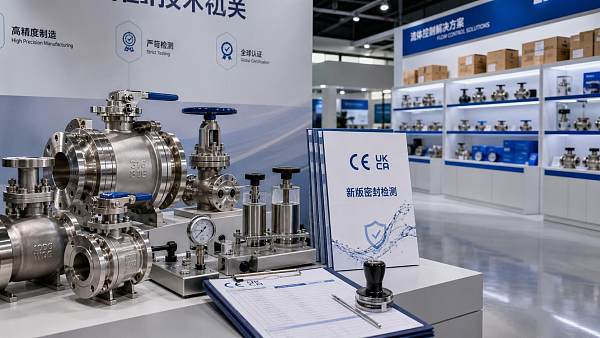
- Qingdao Fluid Machinery Exhibition Day One Focuses on the CE/UKCA-Compliant Valve Supply ChainAug 15, 2026
- The Strong Growth of Construction Machinery Exports Drives Rising Demand for Pump and Valve Supporting CertificationsAug 14, 2026
- The EU will implement dual-standard CE requirements for industrial valves starting in OctoberAug 13, 2026


The U.S. Launches a Countervailing Duty Investigation into Industrial Valves from China
On July 29, 2026, the U.S. Department of Commerce initiated an anti-subsidy investigation into industrial valves manufactured in China, covering products such as control valves, actuators, and related components. The relevant tariff codes include 8481.80 and 8481.90, among others. The initiation of this case not only means that exporting companies are entering the response and questionnaire stage, but will also affect customs clearance arrangements, procurement compliance reviews, and distributor inventory management for North American importers. For European traders engaged in transshipment business through Chinese supply chains, this is likewise a signal of a change in trade rules that requires prompt assessment.
Key Information Confirmed in This Case
The confirmed information indicates that the U.S. Department of Commerce formally initiated an anti-subsidy investigation into industrial valves manufactured in China on July 29, 2026. The products involved include control valves, actuators, and related components among industrial valves, covering HS codes 8481.80, 8481.90, and others. According to the information provided, the exporters concerned are required to submit initial questionnaires within 30 days.
At the same time, the summary provided clearly indicates that the investigation will directly affect customs clearance, procurement compliance, and distributor inventory strategies for importers in the North American market, while creating related risks for European transshipment traders relying on Chinese supply chains. Apart from the information above, no additional implementation details, conclusive determinations, or subsequent outcomes have been provided.
The Impact Is Moving Down the Trade Chain
The Export Side Is First Entering the Documentation and Questionnaire Process
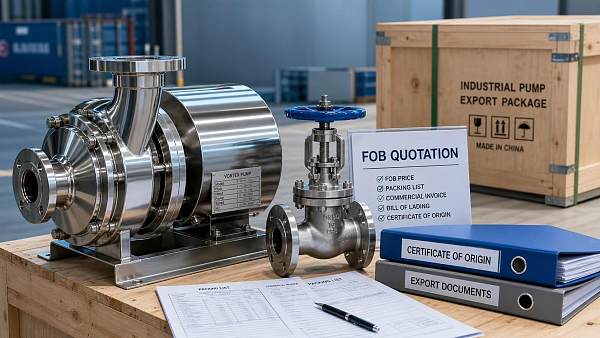
From an operational perspective, suppliers of industrial valves and related components exported to the United States are the first to be affected. This is because, following the initiation of the case, companies face a clear requirement to submit initial questionnaires within 30 days. In the short term, these companies need to focus on product classification, identification of the scope of the products involved, completeness of trade documentation, and consistency of information shared with customers and agents. This change will first affect the preparation of customs declaration documents, the pace of customer communications, and subsequent order arrangements, rather than remaining merely a market news item.
North American Importers and Distributors Will Place Greater Emphasis on Customs Clearance and Inventory Planning
For importers and distributors in the North American market, the main impacts will be increased uncertainty in customs clearance and a potentially more cautious procurement pace. Analysis indicates that, during the initial stage of an investigation, importers generally pay closer attention to whether goods fall within the scope of the investigation, whether procurement documents are consistent with product descriptions, and whether subsequent order execution requires additional room for compliance review. Distributors also need to reassess their inventory structure, as changes in customs clearance arrangements and procurement schedules may directly affect replenishment plans and assessments of existing inventory turnover.
European Transshipment Traders Face Related Compliance Scrutiny
The information provided specifically highlights the related risks faced by European transshipment traders that rely on Chinese supply chains. This means that the relevant business cannot be understood solely from the perspective of sales in the destination market; it is also necessary to re-examine the source of supply, the route of goods, document descriptions, and the consistency of customer communications. For such companies, the key issue is not simply a change in quotations, but whether procurement compliance, delivery commitments, and customer risk notifications in transshipment operations need to be adjusted simultaneously.
Supply Chain Services and Procurement Coordination Need Greater Detail
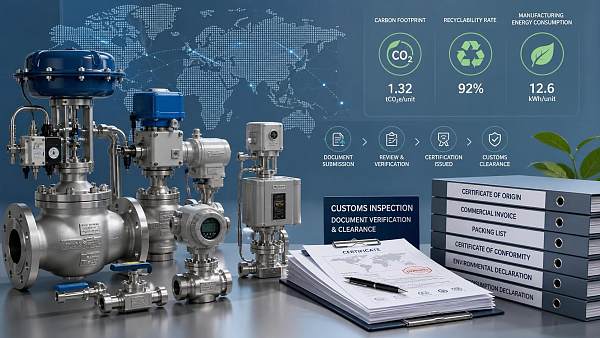
For supply chain service companies, procurement parties, and other relevant service providers involved in this process, the change may bring more detailed document verification requirements. This is because the investigation has transformed external information at the policy level into a real constraint affecting order execution. In actual business operations, greater attention should be paid to whether the contract product name, tariff classification, technical documents, customs declaration documents, and delivery schedule remain consistent, in order to reduce communication costs and compliance deviations during subsequent execution.
Practical Issues That Deserve Greater Attention at This Stage
First Confirm Whether the Products Fall Within the Scope of the Investigation
The most immediate task is to internally verify the product scope covering industrial valves, control valves, actuators, and related components, while reviewing current orders, goods in transit, and planned procurement arrangements in light of the HS codes mentioned, including 8481.80 and 8481.90. If product descriptions, model classifications, or descriptions of related components contain areas of ambiguity, companies should increase the frequency of internal reviews to avoid inconsistencies in the wording of documents.
Questionnaires, Documents, and Technical Materials Should Quickly Adopt a Consistent Position
For companies involved in exports, the requirement to submit initial questionnaires within 30 days means that the time available for document preparation is relatively limited. In addition to the questionnaires themselves, companies should also organize basic materials related to products, transactions, and delivery, including but not limited to technical specifications, product lists, and trade documents. The focus is not on expanding the scope of materials, but on ensuring that information submitted externally is consistent with information retained internally, thereby reducing the risk of being placed at a disadvantage in subsequent communications.
Procurement and Delivery Plans Need to Allow for Flexibility
For procurement parties, importers, and distributors, this information should not currently be viewed merely as a short-term public opinion event. Instead, it should be treated as an advance signal for adjusting procurement and delivery schedules. It is more important to assess whether arrangements for goods in transit, subsequent replenishment schedules, supplier qualification reviews, and alternative procurement plans should be evaluated and initiated simultaneously. Since the information provided does not include definitive implementation results, companies would be better advised to prepare for different scenarios rather than draw direct conclusions.
Continuously Tracking Subsequent Developments Is More Important Than Making Premature Judgments
Since what has currently been confirmed is the “formal initiation of the case” and the “questionnaire requirement,” rather than a final outcome, companies need to focus on subsequent official statements, implementation practices, and changes in customer requirements. In particular, whether more detailed requirements emerge in tender documents, procurement terms, compliance review questionnaires, and customers’ internal approval processes will directly affect the efficiency of order progression.
From an Industry Perspective, This Is More of an Implementation Signal Than a Final Outcome
From an industry perspective, the most important aspect of this news is not merely the investigation itself, but that it has already transmitted changes in trade rules to operational levels such as questionnaires, customs clearance, procurement, and inventory. Based on the analysis, it is currently more appropriate to understand this as a regulatory signal that has entered the implementation process, rather than as a market conclusion with a clear final outcome.
At the same time, the pace of impact is not entirely the same for different market participants. Exporting companies first face documentation and response deadlines, while importers and distributors are more concerned with order execution and inventory arrangements. Transshipment traders need to reassess supply chain routes and the transmission of customer risks. For this reason, the industry still needs to continue monitoring subsequent details, implementation practices, and market feedback, rather than making definitive judgments prematurely.
How Should This Investigation Be Understood at Present?
Overall, the U.S. Department of Commerce’s initiation of an anti-subsidy investigation into industrial valves from China on July 29, 2026, constitutes a change in trade rules requiring an immediate response from relevant parties across the industrial chain. Its practical significance lies in the fact that the companies concerned cannot focus only on the policy headline, but must direct their attention to specific areas such as product scope verification, questionnaire preparation, customs clearance compliance, procurement schedules, and inventory planning.
Viewed rationally, this news is currently better understood as a regulatory development that has entered the implementation stage, while its subsequent impact remains subject to further observation. For the industry, the priority is not to exaggerate the outcome, but to continue tracking the implementation of the rules, customer execution practices, and supply chain feedback within the boundaries of the available facts.
Basis of the Information in This Article and Directions for Further Verification
This article was generated based on the information title, event date, and event summary provided by the user. The core basis includes the following: on July 29, 2026, the U.S. Department of Commerce formally initiated an anti-subsidy investigation into industrial valves manufactured in China, covering control valves, actuators, and related components; the exporters concerned are required to submit initial questionnaires within 30 days; and the investigation will affect customs clearance, procurement compliance, and distributor inventory strategies for North American importers, while creating related risks for European transshipment traders that rely on Chinese supply chains.
For events of this type, subsequent verification generally needs to continue by referring to official announcements, releases from regulatory authorities, information from customs or trade authorities, industry association information, documents from standards organizations, and reports from authoritative media. Since the input does not provide a specific official source link, this article cannot list the corresponding links on that basis. The relevant details still need to be further confirmed through subsequent public information. Matters that deserve continued observation include subsequent policy details, changes in implementation practices, adjustments to tender and procurement documents, industry feedback, and the actual implementation by companies.