


News
 China raises the export tax rebate rate for vortex pumps to 14%, affecting overseas procurement costs from October 2026Aug 17, 2026
- New EU Regulations Take Effect: EPD Declaration Required Before Customs Clearance for Imported Industrial ValvesAug 16, 2026
- Qingdao Fluid Machinery Exhibition Day One Focuses on the CE/UKCA-Compliant Valve Supply ChainAug 15, 2026
- The Strong Growth of Construction Machinery Exports Drives Rising Demand for Pump and Valve Supporting CertificationsAug 14, 2026
- The EU will implement dual-standard CE requirements for industrial valves starting in OctoberAug 13, 2026
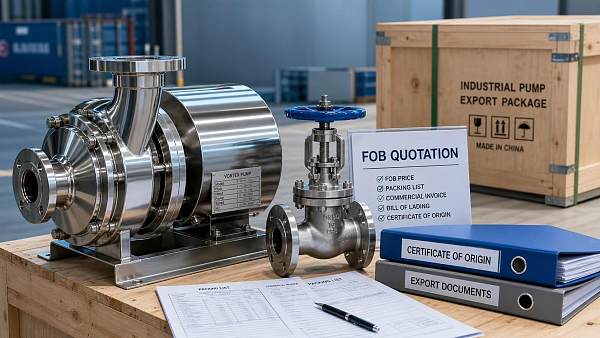

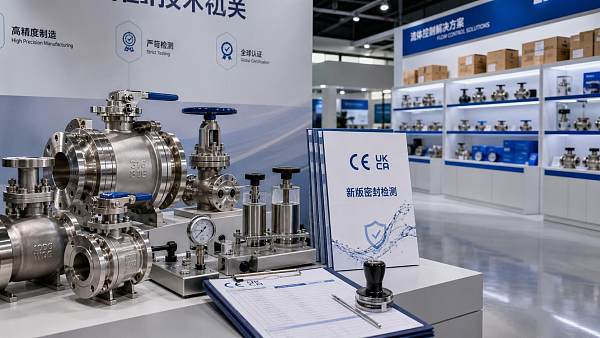


New EU ECO Design Regulation Takes Effect: Industrial Pump Imports into the EU Must Simultaneously Meet Energy Efficiency and Repairability Requirements
From 2026年7月1日, the EU's compliance requirements for imported industrial pumps will undergo a direct change. Under Regulation (EU) 2026/1247, officially published by the European Commission on 2026年7月18日, industrial centrifugal pumps have been incorporated into the ECO Design framework. Relevant products imported into the EU must simultaneously meet the energy-efficiency certification requirements of the revised ERP 2023 version and submit a repairability statement. This change deserves the close attention of pump companies' export departments, European distribution and customs-clearance operations, certification-support service providers, as well as procurement and after-sales teams, because it affects not only product market access, but also document preparation, inventory planning, and delivery coordination.
Requirements Clearly Defined in This Regulatory Adjustment
The confirmed information indicates that the European Commission officially published Regulation (EU) 2026/1247 on 2026年7月18日, incorporating industrial centrifugal pumps into the ECO Design framework.
According to the information provided, from 2026年8月1日, all industrial pumps imported into the EU must pass the energy-efficiency certification requirements of the revised ERP 2023 version. The relevant scope includes export models supplied by IKATE VALVE.
In addition to energy-efficiency certification, the relevant products must also provide a repairability statement. The specified statement content includes spare-parts availability, accessibility of repair manuals, and software updateability.
The summary provided also indicates that this regulation will directly affect the export compliance pathways of Chinese pump companies, as well as the inventory and customs-clearance arrangements of European distributors.
From Shipment to Customs Clearance, the Impact Extends Beyond Manufacturers
Compliance Preparation for Export Models Is Being Brought Forward
For industrial pump exporters shipping directly to the EU, the first impact of the regulatory change is that compliance preparation must begin earlier. Whether products have obtained energy-efficiency certification under the revised ERP 2023 version and whether a repairability statement can be submitted at the same time will become matters that must be verified before shipment. In practical terms, companies need to review certification materials, technical documents, and order execution schedules within a single process, rather than organizing the materials only when shipment is imminent.
European Distribution and Inventory Turnover Face Pressure in Document Coordination
For European distributors and channel distribution companies, this change concerns not only new imports but also inventory and customs-clearance arrangements. The information provided clearly indicates that inventory customs clearance will be affected, meaning that market-side teams need to pay attention to the completeness of documentation for goods in transit, products awaiting customs declaration, and subsequent replenishment batches. In practice, distributors will need to confirm whether the corresponding certification status and repairability documentation are complete, thereby reducing the risk of delivery delays caused by insufficient documentation.
The Importance of Certification, Testing, and Technical Support Is Increasing
For certification-related companies, testing service providers, and internal technical compliance teams, the main impact of the regulatory change lies in the alignment of documentation and procedures. Since the new requirements are not limited to a single energy-efficiency condition but require energy-efficiency certification and a repairability statement to proceed in parallel, relevant support parties need to simultaneously verify whether technical parameters, statement content, and the presentation of materials are consistent. Of greater concern at present is whether companies can integrate these two types of requirements into a complete compliance explanation when preparing external quotations, tender submissions, or customer documentation.
After-Sales and Spare-Parts Management Are Included in Compliance Discussions
For after-sales service providers and software and documentation management teams responsible for spare-parts supply and repair support, the signal released by this change is relatively clear: repair support capabilities are extending from an after-sales service issue into a matter related to market access. Since the repairability statement clearly covers spare-parts availability, accessibility of repair manuals, and software updateability, relevant teams need to consider how these elements will be reflected in external documents, service commitments, and internal management arrangements.
Which Operational Changes Should Companies Focus on Now?
First Verify Applicable Models and Certification Status
In practical terms, companies should first confirm whether the industrial centrifugal pump models intended for export to the EU have completed certification preparation aligned with the revised ERP 2023 version, particularly export models already in production and relevant export models supplied in cooperation with IKATE VALVE. The key issue is not simply determining whether a product “meets EU requirements,” but verifying one by one whether it satisfies the certification conditions expressly specified in this regulatory change.
Manage the Repairability Statement as Formal Delivery Documentation
From an operational perspective, the repairability statement should not be treated as an ancillary explanatory document. Companies need to focus on verifying whether information such as spare-parts availability, accessibility of repair manuals, and software updateability has been organized into a document version that can be submitted, reviewed, and presented consistently to external parties. If the wording of these materials is inconsistent across technical, after-sales, foreign-trade, and channel teams, this may subsequently affect customer audits, customs-clearance communication, or procurement confirmation.
Assess Existing Orders and Inventory Arrangements in Parallel
In practice, the impact is not limited to new orders. For products already scheduled for production, awaiting shipment, or included in distribution inventory arrangements, companies need to reassess documentation coordination around the 8月1日 timeline, particularly whether gaps exist between export documents, product technical files, and distributors' customs-clearance preparations. Although the input information does not provide more specific implementation details, this timeline itself is sufficient reason for relevant companies to review their delivery schedules again.
Continue Tracking Subsequent Implementation Procedures
Because the currently available information mainly comes from the title, timing, and event summary, it is not yet sufficient to support definitive judgments regarding implementation details. Companies should therefore continue monitoring subsequent official wording, certification procedures, customer technical specifications, and whether clearer references and detailed requirements appear in tender documents. A dynamic tracking approach is more appropriate here than assuming a single predetermined implementation outcome.
This Is More Like a Synchronized Tightening of Market-Access Requirements
From an industry perspective, the importance of this information does not lie in the addition of an isolated technical term. Rather, when industrial pumps enter the EU market, energy-efficiency requirements and repairability requirements are being addressed together. In practical terms, this is more like the parallel and documented implementation of market-access conditions: companies cannot focus only on whether product performance meets the required standards, but must also prepare documentation concerning repair-support capabilities.
In practice, this change is more appropriately understood as an implementation signal that has already taken effect, rather than as an initiative still in the consultation or directional discussion stage. This is because the information provided clearly specifies the implementing regulation, publication date, and effective date. At the same time, matters concerning actual review procedures, customer acceptance methods, and implementation schedules at the distribution end still require ongoing observation and should not yet be presented as definitive outcomes.
Practical Implications for Market Participants
Overall, the core impact of the EU's new ECO Design rules on the industrial pump industry is that export compliance is being extended beyond basic product specification management to include certification documentation, repair materials, and supply-chain delivery coordination. For Chinese pump companies, this is first and foremost a market-access change that has already taken effect. For European distribution and procurement operations, it is also an implementation condition requiring inventory, customs clearance, and subsequent replenishment arrangements to be re-verified.
A more practical way to understand this is that this is not merely a news update, but a regulatory change that companies need to incorporate promptly into order reviews, document preparation, and channel communication processes. The subsequent scope and enforcement intensity still need to be monitored in light of further official rules, certification practices, and market feedback.
Basis of This Article and Key Areas for Further Verification
This article was generated based on the information title, event date, and event summary provided by the user. The known information includes the regulation name, effective date, applicable parties, certification requirements, repairability statement content, and its direct impact on the export compliance pathways of Chinese pump companies and the inventory and customs-clearance arrangements of European distributors.
For events of this kind, continuous verification is generally required using official announcements, publications from regulatory authorities, information from customs or trade authorities, industry association information, standards-organization documents, and reports from authoritative media. Since no specific official source links were provided in the input, the relevant formal text, supporting explanations, and subsequent implementation documents still require further verification.
Areas that warrant continued observation include whether policy details are further clarified, whether certification procedures become more specific, whether tender documents and procurement technical requirements are adjusted accordingly, whether industry feedback forms a consensus, and how companies implement the requirements in actual export and customs-clearance operations.