


News
 China raises the export tax rebate rate for vortex pumps to 14%, affecting overseas procurement costs from October 2026Aug 17, 2026
- New EU Regulations Take Effect: EPD Declaration Required Before Customs Clearance for Imported Industrial ValvesAug 16, 2026
- The Strong Growth of Construction Machinery Exports Drives Rising Demand for Pump and Valve Supporting CertificationsAug 14, 2026
- The EU will implement dual-standard CE requirements for industrial valves starting in OctoberAug 13, 2026
- New Chinese Pump and Valve Export Regulations: EN 15714-2:2026 Compliance Declaration Required from SeptemberAug 12, 2026



EU REACH Upgrade: Nickel-Containing Industrial Valves Must Include SVHC Declaration from August
Starting from August 1, 2026, industrial valve products entering the EU market, if they involve nickel-based alloys or electroplated nickel components, will face clearer REACH compliance document requirements. Judging from the signal released in this ECHA notice, the impact is no longer limited to material-side declarations, but has extended to valve manufacturing, export delivery, supply chain traceability, and procurement acceptance. For European manufacturers, non-EU factories supplying the EU, and procurement and supply chain service entities involved in supporting parts, this is a change that needs to be implemented as soon as possible at the certificate and process levels.
Direct requirements released by the notice
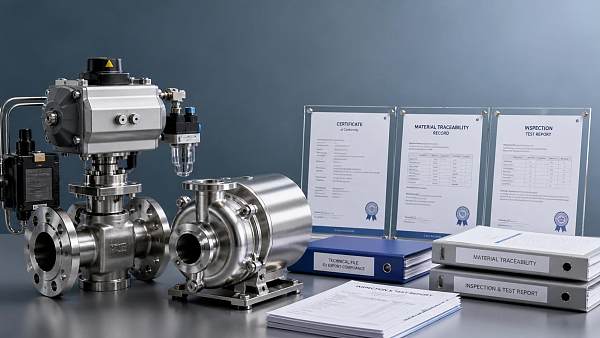
The confirmed information shows that the European Chemicals Agency (ECHA) issued a notice on July 17, 2026. From August 1, 2026, all industrial valves entering the EU market, including control valves and actuators, if they contain nickel-based alloys or electroplated nickel components, must be accompanied by a declaration of SVHC (Substances of Very High Concern) that complies with REACH regulations, as well as traceable supply chain documents.
The provided information also indicates that this requirement will directly affect the compliant export path of European manufacturers such as IKATE VALVE to non-EU markets for nickel-containing valve products, and will also force Chinese foundries to improve their material composition declaration capabilities.
The impact is first reflected in material disclosure and delivery chain terms
The documentation threshold for export and delivery stages is shifting forward
From an industry perspective, export companies directly supplying the EU market will be the first to be affected, because the new requirements are not staying at the product level, but are clearly extending to the accompanying documents. For such companies, the impact is mainly reflected in the preparation of materials before shipment, customer acceptance coordination, and the completeness of order delivery documents. What is more worthy of attention now is whether nickel-containing components can provide SVHC declarations and traceable supply chain documents simultaneously at the time of shipment, which will directly affect whether compliance statements are complete when the product enters the market.
Foundries and manufacturing stages will face more detailed material declaration requirements
For processing and manufacturing companies, especially foundries undertaking valve bodies, actuators, or surface treatment processes, the focus of the impact lies in material composition identification and declaration capability. According to the information provided, Chinese foundries will be forced to improve their material composition declaration capability, which means that the manufacturing side not only needs to complete production, but also needs to more clearly correspond to the material information of nickel-based alloy or electroplated nickel components, and cooperate in forming a traceable document chain.
Procurement and supply chain coordination will shift from price comparison to material completeness
For raw material procurement companies, purchasers, and supply chain service entities, the pressure brought by the rule change is mainly reflected in supplier management and delivery handover. Observing the situation, what needs to be paid attention to in procurement decisions is no longer only part specifications and delivery times, but also whether suppliers can provide SVHC declarations and traceability data that match REACH requirements. Supply chain service companies, in turn, need to pay attention to whether document transfer, version consistency, and order-supporting materials are complete, so as to avoid compliance breaks at the delivery stage.
What should companies focus on now
First check which products will be included in this round of requirements
Analysis shows that companies first need to identify whether their own products contain nickel-based alloys or electroplated nickel components, especially related categories such as industrial valves, control valves, and actuators. This work is the basis for subsequent preparation, because only by first clarifying which products fall within the scope of the requirements can subsequent declaration preparation, document sorting, and customer communication have a clear starting point.
Treat declaration documents and traceability data together
One point worth noting in this information is that the requirement is not limited to the SVHC declaration itself, but also includes traceable supply chain documents. For enterprises, this means compliance work can no longer stay at a single-page declaration, but must simultaneously check whether material source descriptions, component information transfer, and supply chain records can correspond to each other. If a company’s current process manages declarations and supply chain records separately, linkage issues may arise during subsequent execution.
Pay attention to the synchronous changes in customer document requirements and procurement paths
Because the input information does not provide a more detailed implementation path, it cannot currently be understood as a unified operating standard already formed by all market participants. But from a practical perspective, companies need to pay attention to whether customer contract annexes, technical document lists, acceptance material requirements, and tender documents have clearly written the relevant statements. Such changes are often first reflected at the procurement and delivery document level, and then gradually become standardized requirements.
Reserve compliance sorting time for delivery rhythm
Observations show that the delivery rhythm of nickel-containing products may be affected by the efficiency of material sorting. Especially for enterprises with many supply chain tiers and dispersed component sources, more advance arrangements for document collection and verification work are needed. What is more worth paying attention to now is whether the enterprise already has the ability to form a complete and corresponding material package before the delivery milestone, rather than waiting until the customer raises supplementary material requirements and then tracing them temporarily.
This looks more like an execution signal than just an information prompt
Analysis suggests that this news item is better understood as a compliance signal that has already entered the execution stage, because the effective date has been clearly set for August 1, 2026, and the objects involved, the products concerned, and the required document types have all been pointed out. But at the same time, it is also necessary to see that the input information does not provide a more detailed enforcement path, review method, or market feedback, so the industry still needs to continue observing subsequent official statements, customer implementation scale, and supply chain coordination.
From an industry observation perspective, the core meaning of such changes is that the material information disclosure of valve products is shifting from technical data support toward preconditions in transactions and delivery. For enterprises, the real pressure may not necessarily come from the rule name itself, but from whether material identification, declaration issuance, and supply chain traceability can be effectively connected.
A practical reminder for the valve industry chain
Taken together, this REACH-related requirement upgrade points to the tightening of document compliance requirements for nickel-containing industrial valves entering the EU market. Its impact on manufacturers, foundries, purchasers, and supply chain service entities is mainly concentrated in several links such as composition declaration, document preparation, traceability management, and delivery coordination. It is now more appropriate to understand this news as an execution change with a clear time boundary, and also as a precursor signal that subsequent market document requirements may continue to become more detailed.
Basis of this article and follow-up verification focus
This article is generated based on the title, event occurrence time, and event summary provided by the user. The information used includes: ECHA issued a notice on July 17, 2026; from August 1, 2026, industrial valves entering the EU market that contain nickel-based alloys or electroplated nickel components must be accompanied by SVHC declarations and traceable supply chain documents that comply with REACH regulations; and the possible direct impact of this requirement on European manufacturers and Chinese foundries.
For such events, it is usually still necessary to combine official announcements, information released by regulatory agencies, trade authority departments, industry association information, standard organization documents, and authoritative media reports for continuous verification. Since the input does not provide a specific official source link, the relevant link information still needs further confirmation. What should continue to be observed later also includes: whether policy details are further clarified, whether certification or review implementation paths are refined, whether tender and procurement documents are adjusted simultaneously, and the industry feedback and actual execution conditions.