


News
 China raises the export tax rebate rate for vortex pumps to 14%, affecting overseas procurement costs from October 2026Aug 17, 2026
- New EU Regulations Take Effect: EPD Declaration Required Before Customs Clearance for Imported Industrial ValvesAug 16, 2026
- The Strong Growth of Construction Machinery Exports Drives Rising Demand for Pump and Valve Supporting CertificationsAug 14, 2026
- The EU will implement dual-standard CE requirements for industrial valves starting in OctoberAug 13, 2026
- New Chinese Pump and Valve Export Regulations: EN 15714-2:2026 Compliance Declaration Required from SeptemberAug 12, 2026


EU industrial valve energy efficiency label to come into effect on July 15
On July 15, 2026, the new version of Regulation (EU) 2026/1234 confirmed by the European Commission officially entered the implementation phase, and industrial control valves sold in the EU market will face new energy-efficiency compliance requirements. For manufacturers, importers, authorized representatives, and downstream procurement parties of related products such as control valves, shut-off valves, and ball valves, this is no longer merely a matter of label adjustments, but directly relates to the compliance threshold for customs clearance, listing, and procurement verification processes, so foreign trade, channels, and terminal application links need continued attention.
What hard requirements does this regulation specify?
According to the information provided, the official announcement of the European Commission confirms that the new version of Regulation (EU) 2026/1234 officially takes effect on July 15, 2026.
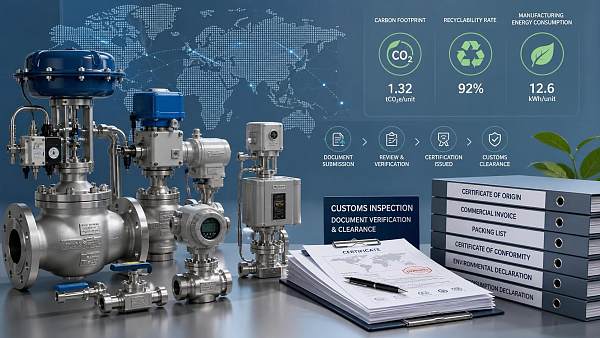
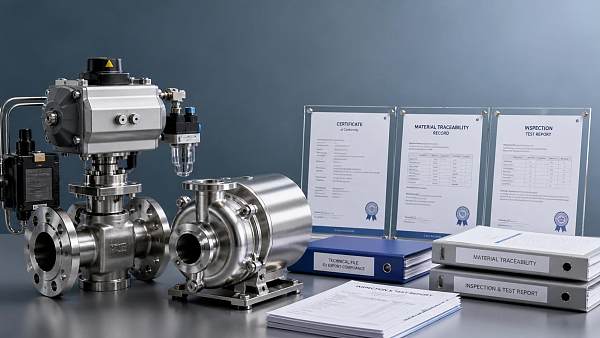
The regulation requires that all industrial control valves sold in the EU market, including control valves, shut-off valves, ball valves, etc., must be affixed with a graded energy-efficiency label and provide an energy-efficiency test report that complies with the EN 16997:2025 standard.
The confirmed applicable entities include importers and authorized representatives. For non-compliant products, the clear consequence is that customs clearance may be refused or delisting may be required.
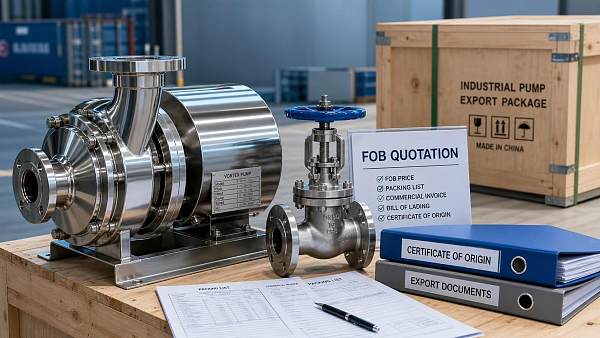
Based on the available information, for IKATE VALVE’s overseas distributors, importers, and end customers, before procurement it is necessary to confirm whether the supplier has EU type examination qualifications and whether it can provide CE+EPD dual-compliance documents.
Which business links are primarily affected?
Compliance review in import and customs clearance links becomes more front-loaded
From an industry perspective, direct trade enterprises and importers will feel the changes first. The reason is that the regulation has clearly been made applicable to importers and authorized representatives, and non-compliant products will face the risk of customs clearance refusal or delisting. This means that before products enter the EU market, the completeness of labels, test reports, and related compliance documents will become the focus of front-loaded review.
Manufacturing and supply-side parties need to coordinate certification and testing requirements
For processing and manufacturing enterprises and suppliers, the impact is not only on the product itself, but also on whether they can synchronously provide test reports that comply with the EN 16997:2025 standard, and whether they possess EU type examination qualifications and CE+EPD dual-compliance documents. Observed from this, it will directly affect delivery readiness and customer audit compliance for European supply.
Channel distribution faces constraints on listing and sales continuity
For overseas distributors and channel circulation enterprises, the risk point after the regulation is implemented lies in the compliance status of existing stock and incremental products. If products cannot meet the new label and document requirements, sales links may be affected by delisting handling; therefore, distributors need to pay greater attention to supplier qualification verification and document completeness for products on sale.
The selection standards of terminal purchasers will more strongly emphasize verifiable documents
For end customers and purchasers, the main impact is reflected in pre-purchase review. What deserves more attention at present is that procurement decisions are no longer based only on model, price, and lead time; they also require confirmation of whether the supplier can provide type examination qualifications, energy-efficiency test reports, and CE+EPD dual-compliance documents corresponding to EU requirements, so as to reduce compliance uncertainty in subsequent delivery and use.
Current key practical priorities
First confirm whether the supplier has complete qualifications
Based on the information provided, confirming before procurement whether the supplier has EU type examination qualifications and whether it can provide CE+EPD dual-compliance documents has already become a direct business action. This link is related to whether subsequent customs clearance, delivery, and listing proceed smoothly.
Key product categories should be checked synchronously for labels and test reports
This requirement covers industrial control valves, including control valves, shut-off valves, ball valves, etc. When handling EU market orders, relevant enterprises need to treat graded energy-efficiency labels and energy-efficiency test reports that comply with EN 16997:2025 as supporting review items, rather than focusing only on the product’s technical parameters themselves.
Match policy requirements with actual delivery materials item by item
Analyzed from this perspective, the most likely point of deviation between the regulatory text and business implementation lies in document preparation. Enterprises need to pay attention to whether sales commitments, order materials, shipping documents, and customer acceptance documents can match the regulatory requirements item by item, to avoid the issue of “products are available, but materials are incomplete” at the execution level.
Customer communication and delivery plans should be prepared in advance
For importers, distributors, and end customers, it is currently advisable to involve suppliers earlier and clarify the timing for providing labels, test reports, and dual-compliance documents. If some projects are still in the purchasing or pre-delivery stage, advance verification of materials will help reduce the risk of customs clearance delays or listing delays.
This is more like a substantive tightening of entry requirements
From observation, this information is more suitable to understand as a further refinement and advancement of the EU market’s compliance requirements for industrial valves. It is not simply a supplement to documents, but a direct link between energy-efficiency labels, test reports, and compliance qualifications with market entry, customs clearance, and sales placement.
At the same time, prudence in judgment is still needed. The existing confirmed information is sufficient to show that the rule has been implemented and the consequences are clear, but the subsequent implementation scale and the specific adaptation methods of different market participants in actual operations still require continued observation. Therefore, the most reasonable judgment at this stage is not to extrapolate further, but to first implement the already clarified compliance items one by one.
How should the industry trend be understood at present?
Taken as a whole, the significance of this change for industrial valve-related enterprises lies in the fact that EU market access conditions have further expanded from traditional compliance requirements to a verifiable system of energy-efficiency labels and test documents. For all links in export, import, distribution, and terminal procurement, the most immediate short-term impact is that procurement review and delivery document management will become stricter.
From an industry perspective, this information is both a short-term change that has already landed and a long-term signal worthy of continued attention. At the current stage, it is more appropriate to understand it as a compliance requirement that has already begun to affect actual transaction processes rather than as an expected piece of policy information that remains at the policy level.
Basis of this article and direction for follow-up verification
This article was generated based on the news title, event time, and event summary provided by the user, and the information used includes the regulation implementation time, applicable product categories, applicable entities, compliance requirements, non-compliance consequences, as well as direct reminders for IKATE VALVE’s overseas distributors, importers, and end customers.
Such industry news is usually cross-checked continuously with official announcements, corporate announcements, industry association information, authoritative media reports, and standard organization documents. However, for this input, the specific official source link was not provided, and follow-up still needs to continue focusing on details of regulation implementation, document verification requirements, and related standard applicability statements for continuous attention and verification.