


News
 China raises the export tax rebate rate for vortex pumps to 14%, affecting overseas procurement costs from October 2026Aug 17, 2026
- New EU Regulations Take Effect: EPD Declaration Required Before Customs Clearance for Imported Industrial ValvesAug 16, 2026
- Qingdao Fluid Machinery Exhibition Day One Focuses on the CE/UKCA-Compliant Valve Supply ChainAug 15, 2026
- The Strong Growth of Construction Machinery Exports Drives Rising Demand for Pump and Valve Supporting CertificationsAug 14, 2026
- The EU will implement dual-standard CE requirements for industrial valves starting in OctoberAug 13, 2026


U.S. CBP New Regulations Take Effect: Industrial Valve Imports Must Submit a Technical Compliance Declaration
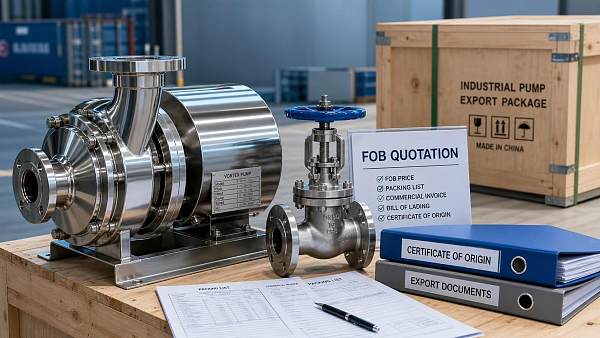
Starting August 1, 2026, U.S. Customs and Border Protection (CBP) will implement new customs clearance requirements for industrial valve imports: products classified under HS codes 8481.80 and 8481.90 must be accompanied by a certified Technical Compliance Declaration for Fluid Control Equipment (TCDS) at the time of customs clearance. This change deserves close attention from valve manufacturers, exporters, OEMs, distributors, and related supply chain service providers, as it directly affects customs clearance efficiency, the level of documentation preparation required, and the control of port storage costs. The impact will be particularly direct on U.S.-bound business with tight delivery schedules.
What specific compliance requirements are covered by the new rules
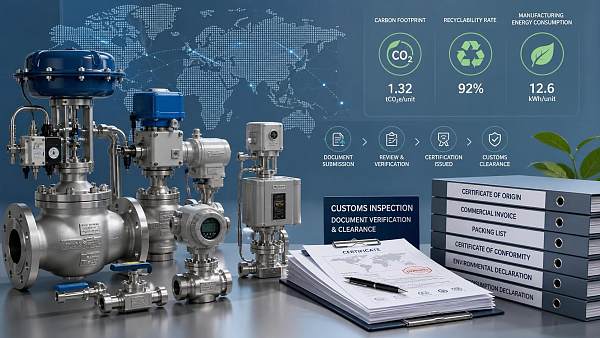
According to the information provided, CBP will officially implement the new rules on August 1, 2026. They apply to imported industrial valve products, covering products classified under HS codes 8481.80 and 8481.90. At customs clearance, the relevant goods must be accompanied by a certified Technical Compliance Declaration for Fluid Control Equipment (TCDS).
The declaration covers material composition, pressure rating verification, sealing performance testing, and applicable standards, such as ASME B16.34 and ISO 5211. Failure to submit the declaration or the submission of inaccurate declaration information has been clearly identified as grounds for a 100% inspection and port storage charges.
The impact extends beyond customs declaration to multiple business roles
For direct exporters, the main focus is on documentation completeness
From an industry perspective, valve exporters shipping directly to the U.S. market will be the first to feel the change. This is because the new rules move technical compliance documents forward to the customs clearance stage, with the initial impact appearing in customs documentation preparation, technical document consolidation, and pre-shipment review. Companies need to focus not only on whether the documents exist, but also on whether their contents cover key items such as materials, pressure ratings, sealing tests, and applicable standards.
OEM and fast-delivery operations face greater time pressure
From an operational perspective, OEM businesses that rely on fast delivery are more likely to be affected. If the documentation is incomplete or the information is inaccurate, a 100% inspection may be triggered, resulting in additional port storage charges. For these businesses, the main impacts involve delivery timelines, fulfillment of customer commitments, and coordination with order scheduling. The key concern is whether preparation of the technical declaration can keep pace with shipment schedules.
Distributors and channel businesses need to reassess pre-arrival preparations
For U.S.-oriented distributors and channel businesses, although the requirement takes effect at the import customs clearance stage, its practical impact will move upstream to supplier selection and pre-arrival document verification. These businesses need to determine whether upstream suppliers can consistently provide certified TCDS documents and whether compliance information remains consistent across different batches and product models, thereby reducing uncertainty in time and costs caused by inspections after arrival.
Supply chain service providers will face higher documentation coordination requirements
Customs brokers, logistics companies, and related supply chain service providers will also be affected. Their operational pressure will arise less from the products themselves and more from the increased complexity of document review, information handover, and exception handling. The key issue is whether the information chain between service providers, cargo owners, and manufacturers is sufficiently clear, and whether the consistency between the technical declaration and the cargo information can be verified before customs clearance.
Which business processes require closer attention now
First confirm whether the products fall within the applicable scope
In practice, the first point to examine is whether a company's existing U.S.-bound export products fall under HS codes 8481.80 and 8481.90. For businesses involving multiple models, multiple configurations, or the parallel export of components and complete units, classification confirmation will directly affect the timing of subsequent documentation preparation.
Move technical document preparation from after shipment to before shipment
From an operational perspective, the key to the new rules is not simply the addition of one document, but the conversion of technical compliance certification into a prerequisite for customs clearance. Companies should pay particular attention to whether information on material composition, pressure rating verification, sealing performance testing, and applicable standards has been organized into documentation that can be submitted and verified, rather than waiting until the customs declaration stage to complete it on a temporary basis.
Focus on the two practical requirements of “certification” and “truthful information”
Confirmed information indicates that failure to submit the declaration or submission of inaccurate information may trigger a 100% inspection and port storage charges. Therefore, companies need to focus not on merely submitting the document, but on the truthfulness and consistency of its contents. For companies involving extensive cross-department collaboration, the accuracy of information transfer among procurement, engineering, quality, international trade, and customs declaration teams will directly affect implementation results.
Customer communication and delivery contingency plans need to be adjusted simultaneously
For orders intended for U.S. customers, particularly those with delivery-sensitive schedules, companies should pay close attention to customer communication and delivery contingency plans. Companies need to incorporate the customs documentation preparation period into delivery arrangements and allow sufficient buffer for possible inspections and port storage risks in order to reduce subsequent fulfillment friction.
This is more like a clear signal that compliance is moving upstream
This information is not merely about an adjustment to the customs declaration process. Rather, it more clearly embeds technical compliance requirements for industrial valves into the import review process. The signal it conveys is that, for exports of relevant products to the United States, technical parameters, test results, and applicable standards information are shifting from “supporting documentation” to the status of “prerequisites for customs clearance.”
At the same time, whether this change will further affect the actual customs clearance schedules of different types of valve products, customer acceptance requirements, or supplier selection criteria is still more appropriately understood as an industry development requiring continued observation. What can be confirmed at this stage is that the cost of missing or falsifying compliance documents has been clearly defined, increasing the need for companies to complete document verification before shipment.
Short-term implementation changes, with continued observation needed in the long term
Overall, the new rules implemented by CBP from August 1, 2026, constitute a clear compliance requirement for industrial valve exports to the United States. Their direct significance is that customs clearance will rely more heavily on technical declarations, requiring relevant companies to reassess document preparation, delivery arrangements, and supply chain coordination.
However, based on the current assessment, this information is best understood as both a short-term implementation change that has already taken effect and a long-term compliance signal worth monitoring. For the industry, the priority is not to exaggerate the impact, but to quickly identify which business processes will face increased time and cost pressures as a result and adjust actual operations accordingly.
Basis of this article and areas for subsequent verification
This article was generated based on the information title, event date, and event summary provided by the user. Its core content focuses on the technical compliance declaration requirements for industrial valve imports implemented by U.S. CBP on August 1, 2026. Such information is typically cross-verified against official announcements, corporate announcements, industry association information, authoritative media reports, and documents issued by relevant standards organizations.
Because no specific official source link was provided in the input information, this article does not cite a specific link, and the relevant statements still require continued verification. Areas that merit further attention include CBP's subsequent clarification of implementation details, companies' understanding of the applicable boundaries during actual customs clearance, and differences in how TCDS-related document requirements are implemented in different business scenarios.