


News
 China raises the export tax rebate rate for vortex pumps to 14%, affecting overseas procurement costs from October 2026Aug 17, 2026
- New EU Regulations Take Effect: EPD Declaration Required Before Customs Clearance for Imported Industrial ValvesAug 16, 2026
- Qingdao Fluid Machinery Exhibition Day One Focuses on the CE/UKCA-Compliant Valve Supply ChainAug 15, 2026
- The Strong Growth of Construction Machinery Exports Drives Rising Demand for Pump and Valve Supporting CertificationsAug 14, 2026
- The EU will implement dual-standard CE requirements for industrial valves starting in OctoberAug 13, 2026
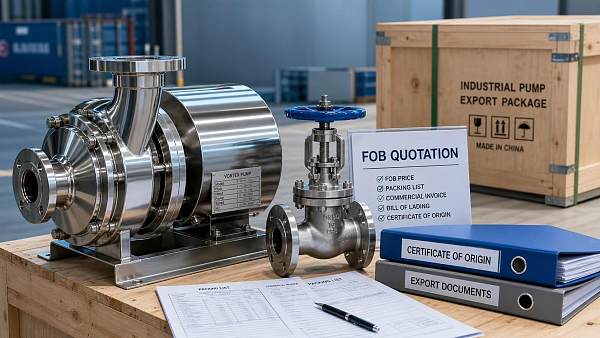
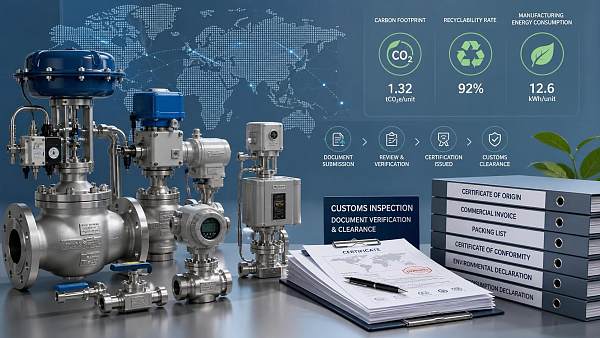
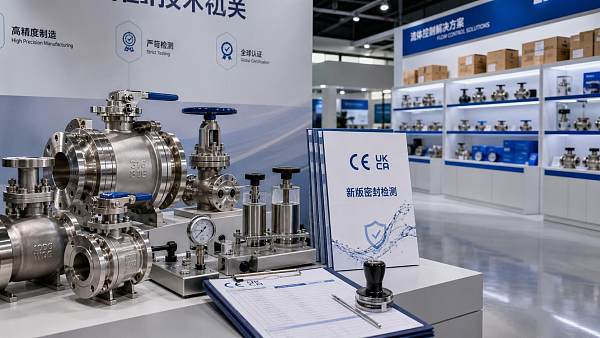

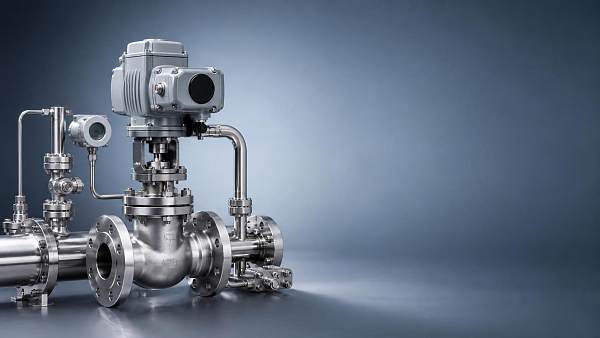
The EU's new Machinery Regulation has entered into force, requiring industrial valves to meet dual CE and UKCA compliance requirements
Starting August 7, 2026, the EU's new Machinery Regulation (EU) 2026/1397 will become mandatory. Fluid control equipment such as industrial control valves equipped with actuators will be included in the updated compliance framework. This change deserves close attention in relation to valve manufacturing, export trade, technical document preparation, and certification pathways for the EU and UK markets, as it involves both CE and UKCA conformity assessments, as well as the requirement to upload digital declarations of conformity (e-DoC).
Which aspects of industrial control valves are covered by the new regulation
On August 6, 2026, the Official Journal of the European Union published Regulation (EU) 2026/1397, which comprehensively updates the original Machinery Directive 2006/42/EC and will become mandatory from August 7, 2026, for fluid control equipment such as industrial control valves equipped with actuators. According to the information currently available, the new regulation expressly requires valve products exported to the EU and UK markets to satisfy both CE (EU) and UKCA (UK) conformity assessments.
The same round of adjustments also introduces a mandatory requirement to upload digital declarations of conformity (e-DoC) to the EU Product Compliance Portal. Based on the information currently available, this is not merely a change at the labeling level; rather, it places product compliance, document submission, and platform-based declaration within the same process.
What impact will the new regulation have on each stage of the valve industry chain
Export business serving the EU and UK
The companies directly affected are those selling industrial valves to the EU and UK markets. Certification and documentation processes that may previously have been handled separately now need to account for both CE and UKCA conformity assessments at the same time. The preparation of documentation, version management, and delivery schedules will therefore depend more heavily on early planning.
Manufacturing and assembly of products equipped with actuators
According to the information, the regulation specifically applies to fluid control equipment such as industrial control valves equipped with actuators. Manufacturers therefore need to verify at an earlier stage whether their products fall within the scope of application. For assembly, testing, and technical document preparation, the focus is not limited to the finished product; it also concerns whether the compliance chain corresponding to the finished product is complete.
Re-export and third-party market business
This change also directly affects the preparation of technical documentation and certification pathways when European manufacturers such as IKATE VALVE re-export valve products to third-party markets such as the Middle East and Southeast Asia. Analysis shows that re-export business often relies on existing documentation systems. Once the compliance requirements of both the country of origin and the final sales market change at the same time, the scope for reusing documents will be reduced.
Supply chain services and compliance support
For service providers offering testing, certification, document preparation, and submission support, the changes are primarily reflected in document formats, submission milestones, and customer communication methods. If a company lacks unified version control and a clear division of responsibilities, issues such as requests for supplementary documents or repeat reviews can easily arise during the delivery period.
Which practical issues should companies focus on now
First confirm whether the product falls within the scope of the new regulation
The first task is not to make a generalized interpretation, but to verify whether a specific valve product belongs to fluid control equipment such as an industrial control valve equipped with an actuator. Only after the scope has been clearly determined can the subsequent CE, UKCA, and e-DoC processes be properly implemented.
Review the documentation chains for both markets simultaneously
For companies serving both the EU and UK markets, technical documentation, type-examination materials, and declarations of conformity need to be organized simultaneously according to both sets of requirements, rather than completing the process for one market and then supplementing it for the other. Analysis shows that this synchronized approach will directly affect internal review and customer confirmation cycles.
Incorporate digital submission requirements into the pre-delivery process
e-DoC must be uploaded to the EU Product Compliance Portal, which means that submission is no longer merely a matter of internal recordkeeping. Companies should confirm in advance who is responsible for document generation, review, upload, and archiving, so as to avoid handling everything only at the shipping stage.
Monitor changes in certification pathways for re-export business
For companies with re-export arrangements involving third-party markets, the issue that deserves greater attention is whether certification pathways will be reorganized due to EU and UK compliance requirements. The policy signal is already clear, but actual implementation will also depend on how companies adjust their technical documentation, customer communication, and market distribution strategies.
This is more like a compliance signal than an isolated adjustment
The significance of this information lies not only in the addition of a regulation number, but also in the further refinement of the EU's compliance management of industrial valves and related fluid control equipment, bringing document submission, dual-market assessment, and product applicability within the same enforcement framework. Based on the information currently available, it is more appropriate to understand this as an effective compliance signal rather than a policy development that remains at the discussion stage.
At the same time, it is not yet possible to infer from this information alone that all valve products will be affected to the same extent. The key factors remain the product structure, whether the product includes an actuator, and the company's export destinations and re-export routes. The industry should continue to monitor whether the authorities provide further clarification on the scope of application, submission procedures, and documentation requirements.
How should this information be understood in the short term
Overall, the impact of the EU's new Machinery Regulation (EU) 2026/1397 on the industrial valve industry is first reflected in the restructuring of compliance pathways, followed by the re-confirmation of technical documentation and market flows. At present, it is more appropriate to regard it as a regulatory change that has already taken effect and will directly affect exports, certification, and document management, rather than as a simple news event.
For the companies concerned, the priority is not to pursue concepts, but to promptly verify the product scope, dual compliance requirements, and digital submission procedures item by item, so as to avoid having to make adjustments passively during delivery and market-access processes.
What information is this article based on
This article was compiled based on the information title, event date, and event summary provided by the user, without introducing any additional unverified data or cases. Sources typically related to this type of information include official announcements, corporate announcements, industry association information, authoritative media reports, and documents from standards organizations. As no specific official source link was provided in the input, this article does not list specific links. The latest wording in the Official Journal of the European Union and related compliance documents still needs to be continuously verified.