


News
 China raises the export tax rebate rate for vortex pumps to 14%, affecting overseas procurement costs from October 2026Aug 17, 2026
- New EU Regulations Take Effect: EPD Declaration Required Before Customs Clearance for Imported Industrial ValvesAug 16, 2026
- Qingdao Fluid Machinery Exhibition Day One Focuses on the CE/UKCA-Compliant Valve Supply ChainAug 15, 2026
- The Strong Growth of Construction Machinery Exports Drives Rising Demand for Pump and Valve Supporting CertificationsAug 14, 2026
- The EU will implement dual-standard CE requirements for industrial valves starting in OctoberAug 13, 2026



New SVHCs under EU REACH: Stricter Compliance Requirements for Valve Sealing Materials
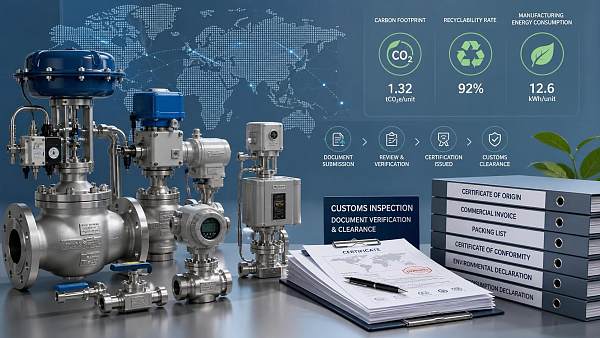
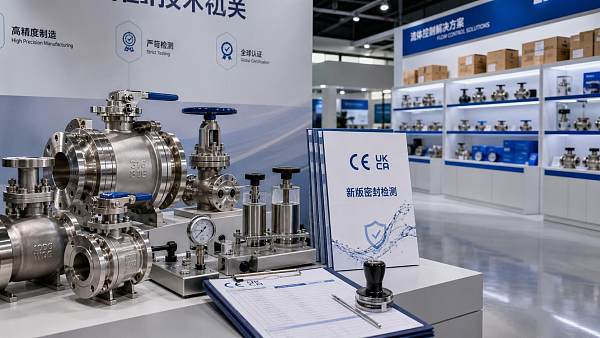
On August 8, 2026, a recent adjustment to the EU REACH Regulation introduced a change directly related to industrial valve exports: three fluorinated polymer additives were added to the Candidate List of Substances of Very High Concern (SVHC). As a result, certain modified PTFE materials commonly used in valve seals have entered a stricter compliance review process. According to the information provided, starting in November 2026, imported valves containing more than 0.1% of the relevant substances will need to complete SCIP notifications and provide SDS. This change deserves the attention of valve manufacturers, exporters, component suppliers, and procurement departments, as it affects not only material selection itself, but also documentation preparation, delivery arrangements, and the pace of supply to the EU.
Known Details of This Regulatory Change
The confirmed information indicates that on August 8, 2026, the European Chemicals Agency (ECHA) added three fluorinated polymer additives to the Candidate List of SVHCs.
This adjustment concerns the compliance of sealing materials commonly used in industrial valves, and is directly associated in particular with applications involving modified PTFE materials.
According to the summary provided, starting in November 2026, if the content of the relevant substances in valve products imported into the EU exceeds 0.1%, a SCIP notification must be submitted and a safety data sheet (SDS) must be provided.
The known affected parties also include medium- and high-end control valves exported from China to the EU and related actuator products. Their compliance processes and delivery cycles will be directly affected.
The Initial Impact Will Be on Materials, Documentation, and Delivery Interfaces
The Selection of Sealing Materials Will Face More Detailed Compliance Checks
From a supply chain perspective, the manufacturing and supporting processes involving sealing material selection will be affected first. Valve manufacturers, actuator component suppliers, and sealing material suppliers will be affected because the regulatory change targets specific substances included on the SVHC Candidate List, rather than entire equipment categories. For products using modified PTFE materials or similar solutions, greater caution will be required in subsequent material confirmation, material declarations, and the collection of supplier documentation.
The analysis indicates that this impact will mainly be reflected in the connection between design selection and incoming material confirmation. Companies need to pay particular attention to raw material composition statements, determinations of restricted-substance content, and whether technical documents and safety information consistent with the actual configuration can be provided for export models.
The Pressure to Prepare Documentation for EU Exporters Will Emerge Earlier
For direct-trade and export companies, the change does not merely mean additional requirements for final customs clearance; it also means that front-end documentation preparation must begin earlier. Since, starting in November 2026, the relevant valves will require SCIP notification and SDS provision when the 0.1% threshold is exceeded, the transfer of information among business, foreign trade, and compliance teams cannot remain limited to collectively supplementing missing documents before shipment.
The affected business processes are expected to include order review, preparation of export documents, preparation of customer delivery document packages, and compliance reviews before shipment. In particular, for medium- and high-end control valves and related actuator products intended for the EU market, model numbers, configurations, and operating-condition adaptations are often more complex, making consistency between material information and delivery documents increasingly important.
Purchasers and Distribution Channels Will Move Compliance Evidence into Transaction Conditions
For purchasers, distribution companies, and project-based procurement activities, the direct result of this change may be higher requirements for the completeness of supplier documentation. The reason is clear: once a product involves restricted substances and reaches the threshold, the procurement and import processes must address the supporting requirements for SCIP notification and SDS.
From an industry perspective, purchasers are more likely to focus going forward on whether suppliers can consistently provide material information, SDS, and relevant declaration documents. Distribution channels also need to note that whether a product can be sold in the EU market may no longer depend only on technical parameters and delivery time, but also on document response speed and compliance cooperation capabilities.
Coordination Requirements Will Increase for Supply Chain Services and Testing Support
Supply chain service companies, testing service organizations, and third parties responsible for compliance support will also undertake more specific coordination tasks as a result of this change. Although the input information does not provide more detailed implementation rules, it is already clear that products involving SVHCs will face higher requirements for substance identification, document collection, and declaration coordination when entering the EU market.
The key focus for these entities is not to overinterpret the rules, but to ensure that companies close the loop on basic work related to declarations, document preparation, and material traceability, thereby reducing the risk of delivery delays caused by missing documentation.
What Practical Changes Require the Most Attention at Present
First Verify Whether Affected Models Involve the Relevant Sealing Materials
For manufacturers and exporters, the most practical action at present is to review which models among the valves, control valves, and related actuator products exported to the EU use sealing materials associated with this list change. The focus is not on conducting a general inventory of all products, but on quickly identifying key models, key customer projects, and key shipment batches that may involve modified PTFE materials.
This step determines the scope of subsequent compliance reviews and also affects whether additional material explanations or reconfirmation of delivery documentation will be required for order execution.
Include SCIP Notifications and SDS Preparation in the Pre-Delivery Process
Since the relevant requirements will directly apply to imported valves starting in November 2026, companies need to treat SCIP notifications and SDS preparation as front-end steps in the delivery chain, rather than supplementary tasks after shipment. For orders exported to the EU in particular, the technical, procurement, quality, and foreign trade teams should confirm material information and the division of document responsibilities at an earlier stage.
The current focus should be on whether internal processes can support this change, including whether information is collected promptly, whether models can be matched with materials, and whether delivery documents can be prepared simultaneously with the order.
Monitor Whether Customer Technical Documents and Tender Requirements Become More Stringent
Companies involved in project procurement, framework supply, or customized product delivery should also monitor whether customer technical documents, procurement terms, and tender documents introduce new requirements related to SVHCs, SCIP, or SDS. Although the input information does not establish that these documents have already changed, from the perspective of the execution chain, this is often the key interface through which regulatory changes are implemented in commercial transactions.
Therefore, companies should treat this change as a signal that customer review requirements may move forward, and prepare a traceable material and documentation system in advance rather than handling everything collectively at the tender or shipment stage.
Assess Delivery Schedules and Supplier Cooperation Capabilities Simultaneously
This change has been clearly linked to compliance processes and delivery cycles, so companies also need to assess whether supplier response capabilities are sufficient to support subsequent implementation. In particular, the ability of upstream suppliers of seals, modified materials, and related components to provide accurate documentation promptly may directly affect the delivery schedule of EU orders for complete-equipment manufacturers.
In the short term, the focus should be on supply chain coordination efficiency rather than prematurely concluding that market outcomes have already been fully determined.
This Is More of an Implementation Signal Than Merely a List Update
From an editorial perspective, this information should not be understood merely as a routine change at the material-list level. What deserves greater attention is that it has specified a clear subsequent implementation date: starting in November 2026, imported valves exceeding the 0.1% threshold will need to complete SCIP notifications and provide SDS. For the industry, this means that the impact of the rules has begun to move from substance identification into transaction and delivery execution.
At the same time, this change cannot simply be described as meaning that all impacts have already been fully implemented. The input information does not provide more detailed enforcement standards, customer implementation methods, or market feedback. It is therefore more appropriate to understand this as an implementation signal with a clear direction, while continuing to monitor companies' actual declarations, changes in customer requirements, and supply chain cooperation.
The Implications for Valve Export Business Are Becoming More Specific
Overall, the significance of this REACH-related change lies in the fact that it moves the compliance issue concerning sealing materials for industrial valves further forward into the export execution process. For medium- and high-end control valves intended for the EU market, related actuator products, and participants in the relevant supply chain, this is not merely a regulatory information update, but also a practical test of capabilities in material identification, document preparation, and delivery organization.
At present, it is more appropriate to understand this information as a regulatory change with a clearly specified implementation date, as well as an ongoing process requiring continued observation of implementation details, customer positions, and industry feedback. At this stage, companies should not exaggerate the impact, but should promptly clarify the affected products, material information, and delivery documentation chain.
Basis of This Article and Directions for Further Verification
This article was generated based on the information title, event date, and event summary provided by the user. The information used is limited to the content provided.
For matters of this kind, subsequent verification usually needs to be conducted continuously in conjunction with official announcements, publications by regulatory authorities, information from customs or trade authorities, industry association information, documents from standards organizations, and reports from authoritative media. Since no specific official source links were provided in the input, this article cannot supplement specific links. The relevant information still needs to be further confirmed through subsequent monitoring.
Content that merits continued observation includes whether supplementary explanations of the policy details are issued, whether certification or compliance implementation standards become clearer, whether customer tender documents and procurement requirements are adjusted, whether industry feedback becomes concentrated on certain key product categories, and whether new changes emerge in companies' document preparation and delivery arrangements during actual implementation.