


News
 China raises the export tax rebate rate for vortex pumps to 14%, affecting overseas procurement costs from October 2026Aug 17, 2026
- New EU Regulations Take Effect: EPD Declaration Required Before Customs Clearance for Imported Industrial ValvesAug 16, 2026
- The Strong Growth of Construction Machinery Exports Drives Rising Demand for Pump and Valve Supporting CertificationsAug 14, 2026
- The EU will implement dual-standard CE requirements for industrial valves starting in OctoberAug 13, 2026
- New Chinese Pump and Valve Export Regulations: EN 15714-2:2026 Compliance Declaration Required from SeptemberAug 12, 2026



The New EU PED Takes Effect: Only a 90-Day CE Transition Period for Valves
On August 9, 2026, the European Commission issued Regulation (EU) 2026/1387, amending the Pressure Equipment Directive (PED) 2014/68/EU, which will become mandatory on November 10, 2026. For companies involved in industrial valves, the key concern is not only the rule update itself, but also the transition period being shortened to 90 days, together with the introduction of new requirements for material traceability, digital type examination reports (e-DoC), and remote compliance verification. These changes will directly affect certification arrangements, delivery schedules, and customer communication for exports to the EU.
The New Rules Focus on Certification Documents and Compliance Verification
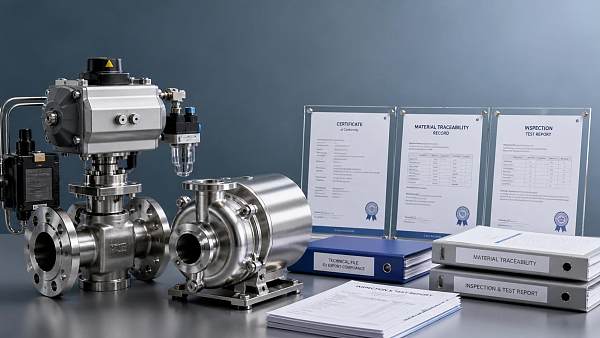
According to the information confirmed, the European Commission issued Regulation (EU) 2026/1387 on August 9, 2026, amending PED 2014/68/EU. The amendment introduces three new requirements: first, material traceability requirements for nickel-containing seals; second, additional relevant requirements for high-temperature and high-pressure control valves; and third, the introduction of digital type examination reports (e-DoC) and remote compliance verification arrangements.
Based on the information provided, the new rules will take mandatory effect on November 10, 2026, leaving only a 90-day transition period for existing CE certificates. This means that the compliance pathways and certification timelines related to industrial valve exports to the EU will be directly affected, involving valve exporters in China and worldwide.
Which Business Areas Will Be Affected First?
Export Order Acceptance and Delivery Scheduling Face a Tighter Time Window
From an industry perspective, trading companies and exporters serving the EU market directly will feel the pressure first. This is because, after the CE certificate transition period is shortened, existing orders, projects in transit, and potential new orders will all need to be rechecked for the applicability of their certification status. The main impacts will be seen in order acceptance decisions, delivery commitments, preparation of documents before customs declaration, and confirmation with customers of the applicable version.
What deserves greater attention at present is that companies cannot look only at whether a product already has a CE certificate. They must also assess whether the certificate remains applicable during the transition between the old and new rules, and whether the relevant technical documentation can correspond to the newly added requirements.
Manufacturers Will Shift Their Attention to the Material and Documentation Chain
For processing and manufacturing companies, the new material traceability requirements will place greater focus on component sources, batch management, and the completeness of supporting documents, especially for products involving nickel-containing seals and high-temperature and high-pressure control valves. The main impacts will involve the retention of production records, coordination of supplier documentation, preparation of type examination-related materials, and internal audit preparation.
Based on the analysis, these impacts may not initially appear as changes to the production line. They are more likely to emerge first in technical documentation, compliance files, and pre-delivery review procedures.
Supply Chain and Service Areas Need to Follow Changes in Verification Methods
For supply chain service companies, certification support service providers, and distribution channels, the introduction of remote compliance verification and e-DoC means that document transfer, audit coordination, and customer acceptance methods may be adjusted. The impacts will mainly involve document formats, transmission efficiency, coordination timing, and cross-regional collaboration.
It appears that all service participants involved in the delivery chain of EU projects need to pay attention to the practical question of whether they can provide documents and verification support that meet the new requirements on time, rather than focusing only on whether the product itself has been manufactured.
Which Practical Issues Should Companies Focus on Now?
First Identify Which Products Are Closest to the Focus of the New Rules
Companies should first identify which of their products exported to the EU involve nickel-containing seals, which are high-temperature and high-pressure control valves, and which orders will enter delivery, acceptance, or certification stages around November 10, 2026. The purpose of this review is to quickly distinguish affected product categories from general products and avoid misjudgments during subsequent unified processing.
Check the Correspondence Between Certificate Status and Technical Documentation
With only a 90-day transition period, whether existing CE certificates can continue to cover subsequent deliveries will become a key practical issue. Companies should focus on checking certificate status, type examination materials, material traceability records, and the availability of digital document support. Particular attention should be paid to whether existing documents can be connected with the e-DoC and remote verification requirements.
Customer Communication Cannot Stop at “Certification Already Obtained”
In external communication, purchasing parties, distributors, and end customers are more likely to be concerned about whether delivery will be affected, whether additional documents are required for the project, and whether the certification timeline will be extended. Based on the known information, companies need to refine the statement “CE certification has already been obtained” into whether the certification will still satisfy the requirements after the new rules take effect. This is more practically meaningful than a general statement.
Continue Following Official Wording and Implementation Details
Based on the analysis, what has currently been clarified includes the issuance of the regulation, the direction of the amendment, the mandatory effective date, and the length of the transition period. At the operational level, however, companies should continue to follow subsequent official wording, implementation guidance, and specific requirements related to remote compliance verification. For companies, there is usually a process of checking and digesting the gap between the rule text and its implementation in business operations.
This Is More Like a Compliance Signal That Compresses Decision-Making Time
It appears that this information should first be understood as an implemented rule change rather than merely a policy trend. Since the mandatory effective date and the 90-day transition period have both been specified, the companies concerned cannot treat it as a long-term or distant issue.
At the same time, it should not be simply understood to mean that all valve products will immediately face the same level of impact. A more reasonable assessment is that the impact will initially be concentrated on products covered by the new requirements, export companies currently advancing EU orders, and business areas that rely on existing CE documentation arrangements for delivery. In other words, this is both a short-term change in the certification schedule that requires a response and a long-term compliance signal worth continuing to monitor.
In the Short Term, This Concerns Delivery and Certification; in the Long Term, Compliance Management
Overall, the core change brought by the EU's new PED 2026/1387 regulation is not only the addition of several technical and documentation requirements, but also the compression of the time available for companies to complete the transition. For the industrial valve supply chain, the short-term priorities are to verify product scope, certificate applicability, and delivery arrangements. In the medium and long term, attention should be paid to whether material traceability, digital documentation, and remote verification gradually become more common basic compliance capabilities.
Therefore, the more appropriate way to understand this information at present is to regard it as a rule adjustment with a clearly defined path to effectiveness, while continuing to observe the subsequent implementation details and scope of business impact, rather than overstating or underestimating its effects.
Basis of This Article and Directions for Further Verification
This article was generated based on the information title, event date, and event summary provided by the user. The information used includes: the European Commission issued Regulation (EU) 2026/1387 on August 9, 2026, amending PED 2014/68/EU; new requirements related to nickel-containing seals and high-temperature and high-pressure control valves; the introduction of e-DoC and remote compliance verification; the new rules becoming mandatory on November 10, 2026; a 90-day transition period for existing CE certificates; and the relevant changes affecting the compliance pathways and certification timelines for Chinese and global valve exporters supplying the EU market.
No specific official source links were provided in the input. Therefore, it remains necessary to continue verifying the formal regulatory text, official announcements, industry association information, company announcements, authoritative media reports, and documents issued by relevant standards organizations. If more detailed implementation guidance is issued later, the industry will need to pay greater attention to its practical application in product scope determination, documentation requirements, and remote verification procedures.