


News
 China raises the export tax rebate rate for vortex pumps to 14%, affecting overseas procurement costs from October 2026Aug 17, 2026
- New EU Regulations Take Effect: EPD Declaration Required Before Customs Clearance for Imported Industrial ValvesAug 16, 2026
- The Strong Growth of Construction Machinery Exports Drives Rising Demand for Pump and Valve Supporting CertificationsAug 14, 2026
- The EU will implement dual-standard CE requirements for industrial valves starting in OctoberAug 13, 2026
- New Chinese Pump and Valve Export Regulations: EN 15714-2:2026 Compliance Declaration Required from SeptemberAug 12, 2026



US CBP Requires Imported Industrial Valves to Include a Supply Chain Compliance Declaration
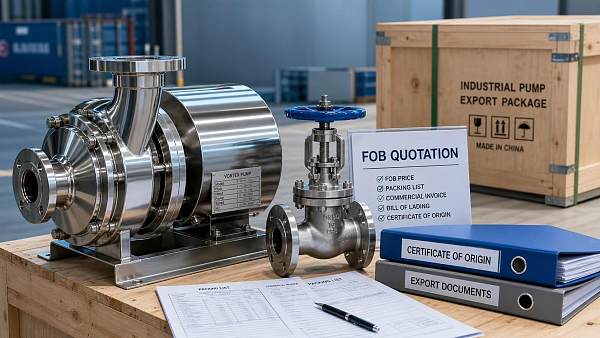
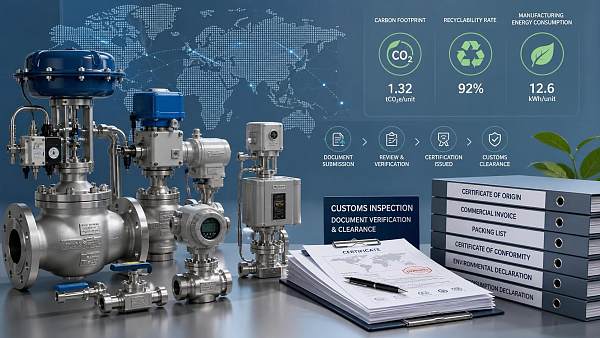
Starting September 1, 2026, customs clearance documentation requirements for imported industrial valve-related products in the U.S. market will undergo clear changes. According to a memorandum issued by CBP on August 10, 2026, industrial valves, actuators, and integrated pump-and-valve equipment must be accompanied by a Supply Chain Compliance Declaration (SCD) signed by the manufacturer at the time of customs clearance. This requirement places direct focus on manufacturing, export, and supply chain management, particularly for orders involving cross-regional sourcing, contract manufacturing, or mixed supply chain models. The completeness of the relevant documentation chain has become directly linked to export procedures to the United States.
What Confirmed Matters Are Covered by the New Requirement
The confirmed information indicates that U.S. Customs and Border Protection (CBP) issued the Import Supply Chain Transparency Memorandum for Fluid Control Equipment (CBP-2026-087) on August 10, 2026, requiring all industrial valves, actuators, and integrated pump-and-valve equipment cleared through customs on or after September 1, 2026, to submit a Supply Chain Compliance Declaration (SCD) signed by the manufacturer.
The declaration covers the country of origin of raw materials, OEM information for key components, the location of final assembly, and records of due diligence concerning forced labor. The information provided also indicates that this requirement will directly affect the export procedures of European manufacturers such as IKATE VALVE to the United States. For orders involving Chinese contract manufacturing or mixed supply chains, the documentation chain needs to be restructured in advance.
The Initial Impact Will Fall on the Documentation and Delivery Chains
Changes Are More Direct for Companies Exporting to the United States
From an industry perspective, companies shipping valves, actuators, and integrated pump-and-valve equipment directly to the U.S. market will first be affected in terms of customs declaration preparation and shipment schedules. This is because the new requirement does not target only the products themselves, but also incorporates a manufacturer-signed declaration into the supporting customs clearance documents. For the companies concerned, the key issue going forward will be whether their existing order documentation is sufficient to provide a complete description of the raw materials, key components, and final assembly location.
Pressure Will Be More Concentrated in Manufacturing and Contract Manufacturing Coordination
Based on current observations, manufacturing companies using contract production, cross-regional supporting suppliers, or mixed supply chains are more likely to feel the impact in two areas: internal traceability and external evidence collection. Since the SCD requires not only the manufacturer's signature but also OEM information for key components and due diligence records, basic trade documents alone may not be sufficient. The companies concerned will need to pay closer attention to the level of upstream cooperation and document consistency.
The Importance of Supply Chain Services and Documentation Support Is Increasing
For supply chain service providers, customs declaration support parties, and other parties coordinating documentation, the key issue brought about by this change is not merely the addition of one declaration, but the coordination between documentation chain completeness and delivery timing. Analysis indicates that if supplier information, OEM information, or assembly information is not properly connected, the impact may be reflected in shipment preparation, customs clearance coordination, and the pace of customer communication.
Purchasers and End Customers Will Pay More Attention to Verifiability
From a business relationship perspective, although purchasers or end customers in the U.S. market are not the direct declaring parties, they will pay greater attention to whether suppliers can provide verifiable compliance documents on time. Particularly for projects involving sourcing and contract manufacturing in multiple locations, the purchasing side needs to consider not only price and lead time, but also whether the manufacturer is capable of preparing a complete declaration.
Practical Steps That Require Greater Preparation at Present
First Verify Whether the Products Fall Within the Scope of This Requirement
For companies, the primary point of attention is whether the categories shipped to the United States fall within industrial valves, actuators, and integrated pump-and-valve equipment, and whether the relevant goods will enter the U.S. customs clearance process on or after September 1, 2026. This date determines the priority of document preparation for existing orders, shipments in transit, and orders pending production scheduling.
Promptly Organize the Information Base That the Manufacturer Can Sign
The key to this requirement is that the Supply Chain Compliance Declaration must be signed by the manufacturer. Based on the analysis, companies currently need to verify not whether a single document exists, but whether the country of origin of raw materials, OEM information for key components, the final assembly location, and forced labor due diligence records have formed an information base that can be consolidated, checked, and signed.
Orders Involving Chinese Contract Manufacturing or Mixed Supply Chains Should Be Checked in Advance
The information provided clearly indicates that the documentation chain for such orders needs to be restructured in advance. For the companies concerned, the key issue at present is whether information is properly connected among contract manufacturers, component suppliers, and brand exporters, so as to avoid discovering only after the business has entered the delivery stage that the declaration cannot be completed consistently.
Customer Communication and Delivery Contingency Plans Need to Be Prepared in Advance
Based on current observations, once this requirement takes effect, customers' main concerns will generally focus on whether the documents can be provided on time, whether customs clearance will be affected, and whether delivery arrangements need to be adjusted. In practice, companies should move customer notifications, the allocation of documentation responsibilities during contract execution, and internal delivery contingency plans forward simultaneously, rather than waiting until the customs declaration stage to address them.
This Is More Like a Signal of Compliance Penetration
The following content constitutes observation and analysis. Based on the information currently available, this change is not merely the addition of a formal document. Rather, it further implements the U.S. import-side requirements for supply chain transparency in fluid control equipment through a specific declaration that can be signed and traced. The focus is not on expanding product function requirements, but on clarifying the review logic at the import stage regarding supply chain sources, component composition, and due diligence records.
Further analysis suggests that this information is more appropriately understood as a regulatory change that has entered the implementation stage, rather than simply a signal of policy direction. However, its long-term impact on the industry will still depend on subsequent implementation details, the efficiency of company cooperation, and whether supply chain documentation capabilities keep pace. Therefore, at this stage, it should neither be treated as short-term noise nor be subject to excessive extrapolation in the absence of further implementation information.
For the Industry, the Focus Has Shifted to the Ability to Provide Proof
Overall, the significance of this new CBP regulation lies in further moving forward the responsibility for explaining the supply chain in exports of industrial valves, actuators, and integrated pump-and-valve equipment to the United States, and clearly placing it on manufacturer signatures and documentation chain completeness. For industry participants, it is currently more appropriate to understand this as an implemented change in the compliance threshold. Its immediate impact will first be reflected in document preparation, supply chain coordination, and order delivery arrangements, while its longer-term effects still require continued observation in light of subsequent implementation.
Basis of This Article and Directions for Subsequent Verification
This article was generated based on the information title, event date, and event summary provided by the user. The core basis includes the content of the new U.S. CBP regulation, its effective date of September 1, 2026, memorandum number CBP-2026-087, as well as the applicable product categories, declaration contents, and descriptions of the impact on European manufacturers and mixed supply chain orders mentioned in the summary.
For this type of information, cross-verification should normally continue to be conducted against official announcements, company announcements, industry association information, authoritative media reports, and documents issued by standards organizations. Since the input information does not provide a specific official source link, the relevant original links and subsequent supplementary explanations still require ongoing verification. Areas to watch going forward include whether CBP provides further clarification of its implementation standards, the applicable declaration boundaries for specific product categories, and whether the documentation requirements for manufacturer-signed declarations are further refined in actual business operations.