


News
 China raises the export tax rebate rate for vortex pumps to 14%, affecting overseas procurement costs from October 2026Aug 17, 2026
- New EU Regulations Take Effect: EPD Declaration Required Before Customs Clearance for Imported Industrial ValvesAug 16, 2026
- Qingdao Fluid Machinery Exhibition Day One Focuses on the CE/UKCA-Compliant Valve Supply ChainAug 15, 2026
- The Strong Growth of Construction Machinery Exports Drives Rising Demand for Pump and Valve Supporting CertificationsAug 14, 2026
- The EU will implement dual-standard CE requirements for industrial valves starting in OctoberAug 13, 2026

The United States Expands Export Controls on Industrial Valves to China
On August 4, 2026, the U.S. Department of Commerce’s Bureau of Industry and Security (BIS) issued an interim final rule, bringing a category of specialized control valves designed for high-temperature and high-pressure applications within the scope of Section 742.15 of the EAR. Exports of the relevant products to China will require a license. For the industrial valve supply chain, the key point of this change is not limited to the inclusion of a single product category under control. More importantly, the compliance pathways for European manufacturers supplying Chinese OEM customers are becoming more restrictive, while distribution and inventory arrangements in the Asia-Pacific region may also enter a phase of reassessment.
Which products are targeted by this rule adjustment
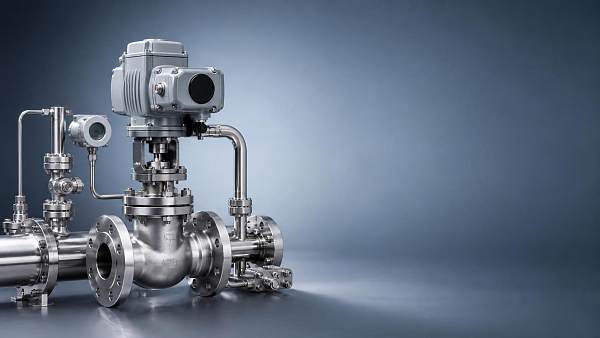
According to the information disclosed so far, the products newly added to the control list are specialized control valves for high-temperature and high-pressure applications. The criteria include a nickel-based alloy content of no less than 30%, a working pressure of no less than 100bar, and a working temperature of no less than 450℃.
The rule was issued on August 4, 2026, by the U.S. Department of Commerce’s Bureau of Industry and Security (BIS), in the form of an interim final rule. According to the summary information, once these products are included under Section 742.15 of the EAR, exports to China will require a license.
The confirmed impacts also include the following: when European manufacturers such as IKATE VALVE supply relevant critical components to Chinese OEM customers, their existing compliance and delivery procedures will need to be adjusted. At the same time, downstream distributors in the Asia-Pacific region may use this development to reassess supply-chain localization arrangements.
The impact is being transmitted layer by layer along the supply chain
Cross-border supply is under pressure first
From an industry perspective, the relevant valve manufacturers and their trade execution teams will be the parties directly facing export compliance requirements. This is because the change directly affects the licensing conditions for exports to China, with the initial impact appearing in product classification, order review, shipment approval, and delivery scheduling. For the companies concerned, the current priority is to determine which models currently being supplied or projects currently in progress fall within the newly added control criteria, and whether existing orders for China will require changes to their execution pathways due to the licensing requirements.
Chinese OEM procurement chains need to revalidate component sources
For Chinese OEM customers and their procurement teams, the impact is not limited to whether the relevant control valves can be purchased. It also concerns the stability of critical component sources and the predictability of delivery times. According to the analysis, once upstream suppliers’ export procedures include an additional licensing step, purchasers will need to simultaneously review contractual delivery arrangements, alternative-material evaluations, and coordination with project production schedules, so that a single critical component does not affect the delivery of complete machines or systems.
Asia-Pacific distribution and regional inventory strategies face adjustments
The core impact on downstream distributors in the Asia-Pacific region lies in whether regional distribution routes and localized configurations remain compatible with the current rules. The summary has clearly indicated that relevant distributors may reassess their supply-chain localization strategies. This means that their focus will shift more toward inventory deployment, customer delivery commitments, and whether regional procurement structures need to be adjusted, rather than simply toward changes in channel pricing.
Supply-chain services and fulfillment coordination are becoming more complex
For supply-chain service functions responsible for order execution, documentation processing, and delivery coordination, new licensing requirements generally mean that internal review and external communication chains will become longer. Although no definitive conclusions can currently be drawn from this alone, it is clear that, for cross-border transactions involving such controlled valves, greater attention will subsequently be paid to the verification of product parameters, material descriptions, and end-use information.
Which practical details require closer attention now
First confirm whether the products meet the newly added parameter thresholds
The most immediate task for companies is to verify the parameters of products being sold, manufactured, and shipped by checking three conditions: nickel-based alloy content, working pressure, and working temperature. The key is not to discuss control risks in general terms, but to confirm whether specific models fall within the range of “nickel-based alloy ≥30%, pressure ≥100bar, temperature ≥450℃.”
Distinguish policy signals from actual order impacts
According to the analysis, the issuance of the rule is an established fact, but its actual impact on different companies’ orders will not necessarily be the same. Companies need to assess changes at the policy-text level separately from delivery schedules, the feasibility of license applications, and customer acceptance milestones in specific projects, avoiding the assumption that all related business will produce the same result.
Prepare documentation and customer communication positions simultaneously
For manufacturers, trading teams, and distributors, one of the subsequent priorities is the completeness of documentation, including the internal consistency of product parameters, material information, and relevant technical descriptions. At the same time, customer communication should be initiated as early as possible. This is particularly important when discussing the supply of critical components, delivery milestones, or alternative arrangements, where clarifying responsibilities and time expectations at an early stage is more important.
Continue monitoring subsequent official statements
Since this is an interim final rule, the companies concerned will also need to continue monitoring subsequent official positions, implementation details, and interpretive information. The more important issue at present is how the rule will affect specific business involving exports to China in actual implementation, rather than limiting the assessment to a policy judgment based solely on the headline.
This appears more like a signal of tightened compliance requirements
As an observation rather than an established fact, this information is currently better understood as a signal of tightened compliance requirements for specific categories of industrial valves. It has already created practical pressure on the export routes and procurement arrangements of the companies concerned, but whether it will further develop into broader supply-chain adjustments still requires continued observation in light of subsequent implementation.
From an industry perspective, the reason this change deserves attention is that it affects cross-border supply of critical components, rather than general market sentiment. For this reason, all affected parties need to focus more on actionable issues such as parameter determination, order execution, and supply-chain coordination.
In the short term, implementation matters; in the medium to long term, supply-chain choices matter
Overall, the U.S. expansion of export controls on industrial valves to China will initially bring higher compliance thresholds and pressure to adjust business procedures. For manufacturers, Chinese OEM customers, and Asia-Pacific distribution operations, the short-term priority is to determine how specific products and orders are affected, while the medium- to long-term focus will be on whether supply-chain localization and regional configurations undergo more clearly defined changes.
Accordingly, this information is currently best understood as “an implemented rule change combined with industry-chain responses that still require observation.” It is not merely a news summary, but it is also not sufficient to directly derive a uniform market outcome.
Basis of this article and directions for further verification
This article was generated based on the information title, event date, and event summary provided by the user. The core information includes the following: on August 4, 2026, BIS issued an interim final rule; specific specialized control valves for high-temperature and high-pressure applications were brought within the scope of controls under Section 742.15 of the EAR; exports to China require a license; and the adjustment affects the compliance pathways for European manufacturers supplying China and the localization assessments of Asia-Pacific distributors.
When continuously tracking this type of information, it is generally also necessary to conduct cross-verification using official announcements, corporate announcements, industry association information, authoritative media reports, and relevant regulatory documents. Since the input content does not provide a specific official source link, the relevant original links and subsequent interpretive documents still require ongoing verification. Areas that warrant further attention include whether supplementary explanations emerge regarding the rule’s implementation approach, as well as the actual adjustments made by relevant companies to their supplies to China and regional supply-chain arrangements.