


News
 China raises the export tax rebate rate for vortex pumps to 14%, affecting overseas procurement costs from October 2026Aug 17, 2026
- New EU Regulations Take Effect: EPD Declaration Required Before Customs Clearance for Imported Industrial ValvesAug 16, 2026
- Qingdao Fluid Machinery Exhibition Day One Focuses on the CE/UKCA-Compliant Valve Supply ChainAug 15, 2026
- The Strong Growth of Construction Machinery Exports Drives Rising Demand for Pump and Valve Supporting CertificationsAug 14, 2026
- The EU will implement dual-standard CE requirements for industrial valves starting in OctoberAug 13, 2026

New EU CE Rules Take Effect: Industrial Valve Certification Requirements Raised
As of July 24, 2026, industrial control valves entering the EU market will be subject to new CE compliance requirements. According to Regulation (EU) 2026/1587, published in the Official Journal of the European Union on July 23, the products concerned must complete functional safety assessment and CE type examination in accordance with EN 14382:2026+A1:2026. The applicable scope includes valve products integrated with pneumatic or electric actuators. For exporters, overseas distributors, importers, and system integrators, this is not an ordinary standards update, but an implementation change directly related to entry clearance and procurement access. It should therefore be incorporated into reviews of customs clearance, product selection, and delivery arrangements as soon as possible.
What compliance requirements will change from July 24
The confirmed information indicates that the Official Journal of the European Union (OJEU) published Regulation (EU) 2026/1587 on July 23, 2026, and that the regulation will take effect on July 24, 2026. The rule requires all industrial control valves entering the EU market, including valves integrated with pneumatic or electric actuators, to complete functional safety assessment and CE type examination in accordance with the new version of EN 14382:2026+A1:2026.
According to the summary provided, the new standard introduces three categories of requirements: first, SIL2-level failure mode analysis; second, digital twin interface compatibility; and third, basic cybersecurity requirements. Products without the corresponding certification will be denied entry by customs authorities of EU Member States.
Based on the confirmed facts, this change is no longer limited to the technical standards level, but is directly linked to market access, customs clearance outcomes, and procurement compliance.
The impact will first be transmitted through the procurement, customs declaration, and delivery chain
Exporters and manufacturers need to recheck whether their products are eligible for entry into the EU
From an industry perspective, valve manufacturers and exporters supplying the EU market directly will be affected first, because the rule clearly targets the market-entry conditions for products entering the EU. The impact will mainly be reflected in certification preparation, the completeness of technical documentation, type examination arrangements, and pre-shipment compliance verification. At present, the key issue is whether companies have incorporated the functional safety assessment requirements corresponding to EN 14382:2026+A1:2026 into their internal review procedures before accepting orders, scheduling production, and arranging shipment.
Importers and overseas distributors need to move procurement reviews forward
For importers and overseas distributors, this change directly affects procurement access decisions. Products without certification may be refused entry at the customs stage, meaning that procurement risks are no longer limited to the end-use stage but may arise earlier during customs declaration and delivery. Relevant companies need to pay closer attention to whether suppliers can provide certification documents, type examination results, and supporting technical documentation matching the new standard, so as to avoid compliance problems in which goods cannot be released after the procurement contract has been executed.
System integrators need to ensure the compliance completeness of integrated valve configurations
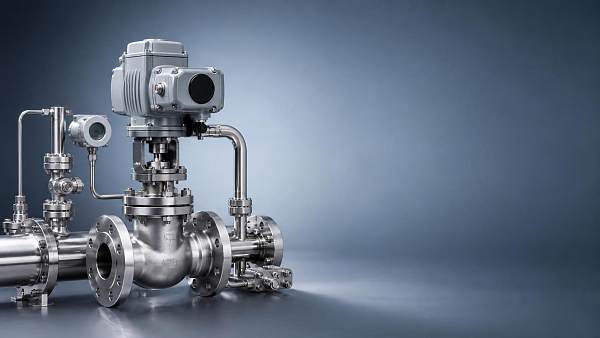
Since the applicable scope clearly includes valves integrated with pneumatic and electric actuators, system integrators will also be affected in product selection and project procurement. The risk lies not only in the valve itself, but also in whether the integrated configuration meets the functional safety assessment and CE type examination requirements of the new standard. If tender documents, technical agreements, or project acceptance documents continue to use the old requirements, inconsistencies between the documentation and the actual products may arise during procurement execution and delivery acceptance.
The focus of certification and testing services will change accordingly
For certification companies and testing service organizations, this regulatory change means that the audit focus has expanded to include SIL2-level failure mode analysis, digital twin interface compatibility, and basic cybersecurity requirements. Although the input information does not provide specific implementation details, it is clear that related services will focus more heavily on the assessment items and document verification corresponding to the new standard.
What practical issues require closer attention at present
First verify whether existing product documentation corresponds to the new standard
Companies should first confirm whether the certification and technical documents for products currently on sale, in production, or awaiting shipment correspond to EN 14382:2026+A1:2026, rather than merely remaining at the level of the previous standard or existing CE documentation. Industrial control valves entering the EU market, especially integrated valve products with pneumatic or electric actuators, should be given priority in this review.
Tender documents and procurement terms need to be updated simultaneously
For purchasers, distributors, and system integrators, attention should now be paid to whether the standard numbers, inspection requirements, and delivery documentation requirements in tender documents, technical specifications, purchase orders, and supplier qualification conditions have been updated. If contract documents continue to use the old wording, the cost of interpretation and the delivery risks during project execution may increase.
Customs clearance documentation should be prepared with release eligibility as the starting point
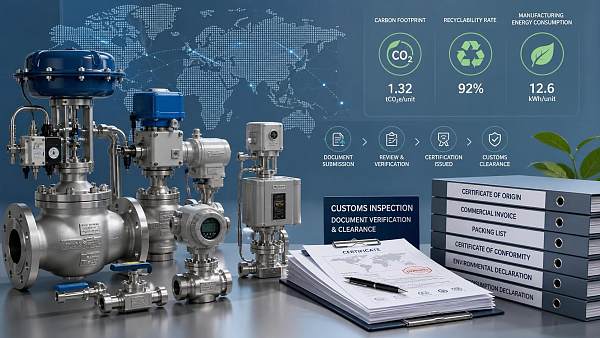
One direct feature of this change is that products without certification will be refused entry by customs authorities of Member States. Companies therefore need to focus their documentation preparations on whether they can support compliant customs clearance. Documents related to CE type examination, functional safety assessment materials, and technical documentation matching the requirements of the new standard should all undergo consistency checks before shipment. Since the input information does not provide more detailed documentary requirements, the current situation is better understood as a need to strengthen the documentation chain in advance, rather than wait to respond passively at the port of entry.
The subsequent implementation approach still requires ongoing monitoring
Although the regulation's effective date has been clarified, the input information does not elaborate on specific audit criteria, documentation requirements under different business scenarios, or how the market will accept the changes. Therefore, in addition to completing compliance self-inspections in the short term, companies need to continue monitoring subsequent official statements, certification implementation practices, customer procurement requirements, and changes to project documentation.
This appears to be an access signal that has already taken effect
This information is better understood as an implemented market-access change rather than a matter still at the stage of consultation or a general policy initiative. The reasons are that the regulation's publication date, effective date, applicable product categories, and border consequences for non-compliant products have all been clearly identified. For the industry, the key issue is not whether the rule will be enforced, but how the review criteria for certification documents, technical interfaces, and basic cybersecurity requirements will be refined during implementation.
At the same time, it should be recognized that the information currently available remains focused mainly on the regulatory framework. Updates to procurement documents in different project scenarios, changes in customer acceptance requirements, and the pace of industry feedback remain matters for subsequent observation, and a uniform market outcome should not be inferred in advance.
Practical implications for market participants
Overall, this change moves the requirements for industrial control valves entering the EU market beyond traditional certification compliance toward parallel reviews of functional safety, interface compatibility, and basic cybersecurity. For relevant companies, it is currently more appropriate to understand this as an access-threshold change that has already taken effect: it first affects whether products can be procured, cleared through customs, and delivered, while deeper market feedback and differences in implementation still need to be observed continuously in light of subsequent guidance and actual project conditions.
Basis of this article and areas for further verification
This article was generated based on the information title, event date, and event summary provided by the user. The key basis includes the Regulation (EU) 2026/1587 published by the Official Journal of the European Union on July 23, 2026, which requires industrial control valves entering the EU market, as of July 24, 2026, to undergo functional safety assessment and CE type examination in accordance with EN 14382:2026+A1:2026. Following the usual verification process for such events, subsequent attention should generally be paid to official announcements, releases by regulatory authorities, information from customs or trade authorities, industry association information, documents issued by standards organizations, and reports from authoritative media. Since no specific official source links were provided in the input, the relevant link information still requires ongoing verification. In addition, the implementation practices for certification, changes to tender documents, market feedback, and the actual implementation by companies also require further observation.