


News
 China raises the export tax rebate rate for vortex pumps to 14%, affecting overseas procurement costs from October 2026Aug 17, 2026
- New EU Regulations Take Effect: EPD Declaration Required Before Customs Clearance for Imported Industrial ValvesAug 16, 2026
- Qingdao Fluid Machinery Exhibition Day One Focuses on the CE/UKCA-Compliant Valve Supply ChainAug 15, 2026
- The Strong Growth of Construction Machinery Exports Drives Rising Demand for Pump and Valve Supporting CertificationsAug 14, 2026
- The EU will implement dual-standard CE requirements for industrial valves starting in OctoberAug 13, 2026
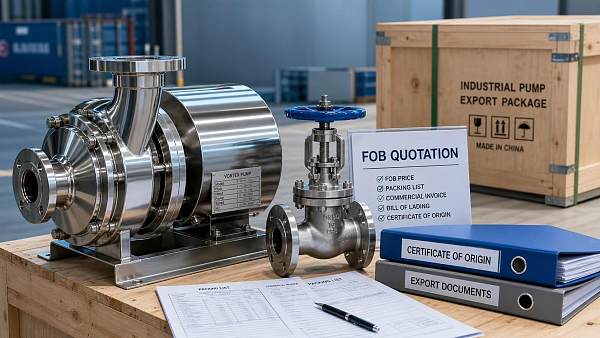

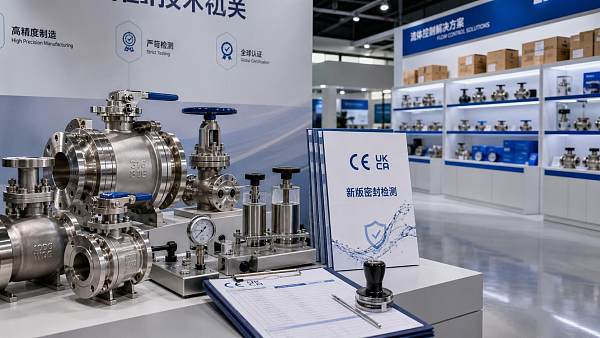


U.S. CBP's New Regulations Take Effect on August 1: Industrial Valve Imports Must Include a Complete Technical Compliance Declaration
Starting August 1, 2026, U.S. Customs and Border Protection (CBP) will implement a new requirement for imported industrial pumps and valves: customs declaration documents must include a certified Technical Compliance Declaration (TCD). This change follows an emergency notice issued by CBP on July 31, 2026, and directly brings material composition, pressure ratings, compliance with ASME/ANSI standards, and the status of third-party certifications such as CE/UKCA within the scope of customs clearance document review. For manufacturers, exporters, importers, and supply chain service providers shipping to the U.S. market, this is not merely the addition of one document; it also imposes higher requirements on document completeness, information response speed, and delivery schedules.
What Confirmed Matters Does the New Requirement Address?
According to the information provided, CBP issued an emergency notice on July 31, 2026, and implemented the new rule from August 1, 2026. The requirement applies to all imported industrial pumps and valves, which must be accompanied by a certified Technical Compliance Declaration (TCD) at the time of import.
The declaration covers material composition, pressure ratings, compliance with ASME/ANSI standards, and the status of third-party certifications such as CE/UKCA. Failure to submit the relevant documents, or submitting incomplete documents, may result in customs clearance delays, return shipment, or fines.
The information provided also clearly indicates that this requirement will directly affect the export processes and document preparation timelines of European manufacturers exporting to the United States, including IKATE VALVE.
The Impact Extends Beyond Export Customs Declaration
Manufacturers and Exporters Serving the U.S. Market
From an industry perspective, this change will first affect manufacturers and exporting companies shipping directly to the United States. The reason is that the new rule moves product technical information and third-party certification status forward to the customs clearance document preparation stage. The business activities most directly affected are pre-shipment document preparation, compliance verification, and document handover with customers or importers. What deserves closer attention now is whether companies can form a complete, certifiable documentation package before shipment that corresponds to specific product batches or models.
U.S. Importers and Procurement Execution Teams
For U.S. importers and procurement execution teams, the impact is mainly reflected in customs clearance coordination and delivery arrangements. Even if the products themselves already have the relevant technical parameters or certification background, an incomplete accompanying Technical Compliance Declaration may still trigger risks of customs clearance delays, return shipment, or fines. Therefore, these parties need to focus not only on purchase prices or delivery times, but also on whether suppliers can provide compliant declaration documents on schedule.
Customs Declaration, Logistics, and Supply Chain Services
Supply chain service companies will also be affected. Customs declaration services, document review, and arrival coordination will rely more heavily on document accuracy and timeliness. For service providers handling the import of industrial pumps and valves, the change requiring attention is that information gaps may no longer be merely a matter of submitting supplementary documents; they may directly affect release schedules and the allocation of subsequent responsibilities.
Downstream Users Dependent on Stable Delivery
For end-user purchasers or project execution teams that depend on the delivery schedule of industrial pumps and valves, the impact of this requirement will be reflected more in supply stability. Once upstream companies experience delays during document preparation, the actual effects will be felt in arrival times and project coordination. Downstream companies therefore also need to include the status of compliance documents in procurement communications, rather than focusing solely on product specifications.
What Requires Greater Attention in Current Business Operations?
First Confirm Whether the TCD Documentation Can Be Completed in Full
For the companies concerned, the primary issue is not whether they are aware of the new rule, but whether they can organize material composition, pressure ratings, compliance with ASME/ANSI standards, and CE/UKCA certification status into a certifiable Technical Compliance Declaration ready for submission. This step determines whether the documents can actually be used for customs clearance, rather than serving merely as a simple compilation of internal technical materials.
Move Document Preparation Forward to the Pre-Shipment Stage
The requirement takes effect on August 1, 2026, leaving companies very little time to make adjustments. Going forward, shipments to the United States will need document preparation to be moved forward to the stages before production scheduling, inspection, or loading, rather than waiting until the customs declaration stage to complete everything at once. For European manufacturers and their U.S. customers, document preparation time has become part of actual delivery.
Distinguish Between “Already Certified” and “Able to Submit the Declaration”
The key difference between the policy signal and its practical implementation is that simply “having the relevant certification” may not be sufficient. The new rule emphasizes the submission of an accompanying certified Technical Compliance Declaration. This means that the parties concerned need to focus on how certification status is presented completely and accurately in customs clearance documents, rather than stopping at the level of “the product already has a certain certification.”
Coordinate Communication with Customers and Partners
Exporters, importers, and service providers also need to consider whether their communication mechanisms should be adjusted accordingly. Questions such as who is responsible for compiling technical information, who confirms the completeness of the declaration, and whether the document version submitted to the customer is consistent will all affect subsequent customs clearance efficiency. Particularly when incomplete documents may result in return shipment or fines, the allocation of responsibilities and delivery milestones need to be clarified as early as possible.
This Appears More Like an Immediate Compliance Tightening Signal
This information should first be understood as a customs clearance requirement that has already entered the implementation stage, rather than as a matter still under consultation or anticipated discussion. Its clarity is reflected in the very short lead time before its effective date and in the directly stated consequences, including customs clearance delays, return shipment, or fines.
At the same time, whether it will further develop into a broader industry compliance tightening signal still requires continued observation. What can currently be confirmed is that the documentation standards for importing industrial pumps and valves into the United States have been raised. However, the information provided contains no further details regarding the scope of enforcement, subsequent interpretive guidance, or whether additional requirements will be introduced; therefore, no definitive conclusions should be drawn.
In the Short Term, a Customs Requirement; in the Long Term, a Test of Document Governance Capabilities
Overall, the direct significance of this information is that trade in industrial pumps and valves with the United States has entered a stage placing greater emphasis on the completeness of technical documentation. In the short term, this will first be reflected in changes to customs declaration documents and shipment schedules. From a longer-term business perspective, it also indicates that the companies concerned need to reassess the efficiency of coordination among internal technical materials, certification information, and external trade documents.
Therefore, this information is more appropriately understood as “a short-term compliance change that has already taken effect, while also serving as a long-term signal worthy of continued observation.” Whether its impact will further expand still depends on subsequent enforcement guidance and how companies respond in practice. At least at this stage, document completeness has become a practical issue that the relevant trading parties cannot avoid.
Basis of This Article and Directions for Further Verification
This article was generated based on the information title, event date, and event summary provided by the user. The core information includes that CBP issued an emergency notice on July 31, 2026; the relevant requirement took effect on August 1, 2026; it applies to imported industrial pumps and valves; and it concerns the submission scope of the Technical Compliance Declaration (TCD) and the consequences of non-compliance.
For this type of information, continued verification would normally also require reference to official announcements, company announcements, industry association information, authoritative media reports, and documents issued by standards organizations. Since no specific official source link was provided in the input, this article cannot make a further comparison with the original announcement text. Continued attention should be paid to relevant CBP statements, implementation details, and changes in companies’ feedback from actual customs clearance operations.