


News
 China raises the export tax rebate rate for vortex pumps to 14%, affecting overseas procurement costs from October 2026Aug 17, 2026
- New EU Regulations Take Effect: EPD Declaration Required Before Customs Clearance for Imported Industrial ValvesAug 16, 2026
- The Strong Growth of Construction Machinery Exports Drives Rising Demand for Pump and Valve Supporting CertificationsAug 14, 2026
- The EU will implement dual-standard CE requirements for industrial valves starting in OctoberAug 13, 2026
- New Chinese Pump and Valve Export Regulations: EN 15714-2:2026 Compliance Declaration Required from SeptemberAug 12, 2026


EU REACH New Regulation Takes Effect on July 1: Nickel-Containing Valves Must Provide an SVHC Declaration
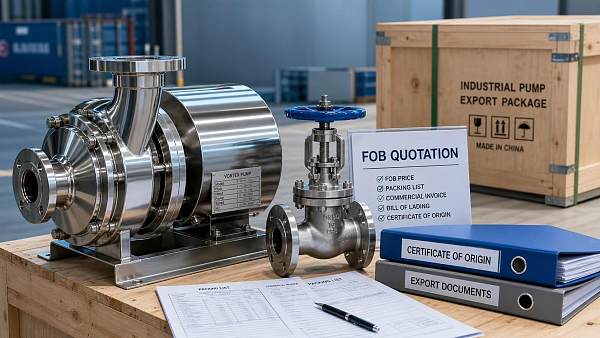
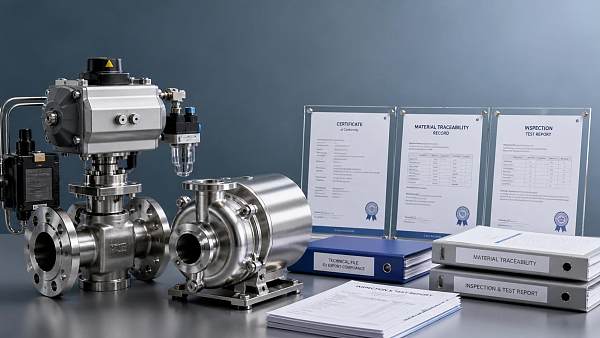
Starting from July 1, 2026, the EU will implement relevant amendments to the REACH regulation. Nickel-containing alloy industrial valves will need to submit a declaration of conformity and an SVHC (Substances of Very High Concern) content test report at the same time during customs clearance. For processes such as valve export, import distribution, procurement acceptance, and delivery management, this is not merely an increase in documentation; rather, whether compliance documents are complete will directly affect whether goods can enter the market smoothly. Therefore, it deserves immediate attention from companies across the industrial chain.
Clear changes in customs clearance document requirements from July 1
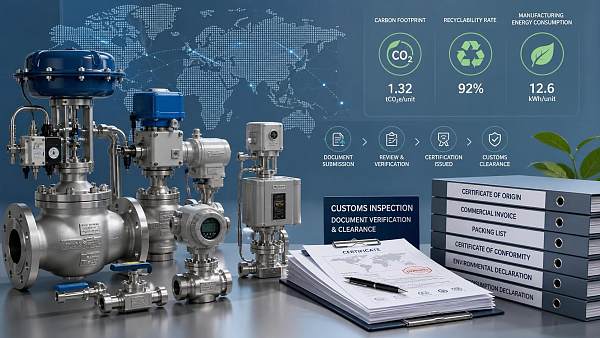
Confirmed information shows that, from July 1, 2026, the EU will officially implement the amendments to the REACH regulation, requiring all nickel-containing alloy industrial valves to be accompanied by a declaration of conformity and an SVHC content test report during customs clearance. The products involved include nickel-containing alloy industrial valves such as control valves, globe valves, and ball valves.
This requirement will directly affect the compliant delivery capabilities of Chinese valve exporters. Products that fail to meet the requirements have been clearly identified as facing the risk of being refused entry or returned.
At the same time, overseas importers and distributors need to immediately update their supplier audit checklists and confirm whether the compliance documents corresponding to existing inventory and new orders are complete.
From shipment to receipt, the impact is not limited to the production side
The export delivery process is the first to face compliance pressure
For valve companies shipping to the EU market, the most directly affected process is document preparation and delivery coordination before and after customs declaration. Since a declaration of conformity and an SVHC content test report are required during customs clearance, companies need to pay attention not only to the product itself, but also to whether the relevant documents can correspond to the order, product category, and batch, so as to avoid missing documents affecting shipment and the delivery schedule after arrival at port.
Supplier audits by importers and distributors will become more specific
For overseas importers and distributors, the change is reflected in the forward shift of supplier management. Both existing inventory and new orders need to be checked for document completeness, which means procurement audits will no longer only confirm product specifications and delivery dates, but will also need to include compliance declarations and test documents as acceptance conditions. From an analytical perspective, this will raise the requirements for suppliers’ document response capability and document consistency.
Procurement and supply chain coordination need to focus on completing documents
For purchasers and supply chain service processes, what currently deserves more attention is whether document preparation will become a new constraint in delivery. Especially in the cross-border procurement of nickel-containing alloy industrial valves, order confirmation, shipment arrangements, arrival acceptance, and document filing need to be connected more closely. Otherwise, even if the products have been manufactured, fulfillment may still be affected due to incomplete customs clearance documents.
Demand for testing and compliance services may increase accordingly
From an industry perspective, service providers that provide testing, compliance review, and technical documentation support for exporters will also be affected by such rule changes. The reason is not that a certain clearly quantified market outcome has been added, but that companies need to prepare submit-ready SVHC-related documents before customs clearance, which will further move forward the timing for preparing test reports and compliance documents.
Which practical changes should companies focus on now
First confirm which products fall within the scope of this requirement
Companies first need to conduct internal checks around nickel-containing alloy industrial valves, especially the product categories that have been specifically identified, such as control valves, globe valves, and ball valves. From an observational perspective, whether product category identification is accurate will directly affect whether subsequent document preparation, order assessment, and customer communication can be carried out in a timely manner.
Include the declaration of conformity and SVHC report in the delivery checklist
For EU orders that are being executed or are about to be executed, companies need to focus on whether the declaration of conformity and SVHC content test report have been included in the contract, shipment, customs clearance, or customer acceptance document checklist. If the input information does not provide a more detailed implementation approach, it is currently more appropriate to understand this as a need to complete the core documents as soon as possible, rather than waiting for the market to digest it on its own.
Check the document completeness of inventory and new orders at the same time
For importers, distributors, and related procurement teams, existing inventory and new orders both need to be checked separately. In practice, it is worth noting that even if inventory products are already in the channel, they may still face a situation in which document completeness is reviewed again during subsequent circulation; new orders should confirm in advance, during the supplier audit stage, whether compliance documents can be provided as required.
Continue tracking subsequent implementation approaches and customer document requirements
Since the existing input information does not provide more specific regulatory details, format requirements, or implementation procedures, companies should also continue to monitor whether clearer changes in requirements emerge from customers, customs clearance processes, and relevant document requirements. From an analytical perspective, at this stage, it is not advisable to regard all implementation details as completely stable, and particular attention should be paid to whether tender documents, procurement terms, and supplier admission requirements are updated simultaneously.
This is more like an implementation signal that has already taken effect
From an observational perspective, this information is more appropriately understood as a compliance requirement that has already entered the practical implementation stage, rather than a policy trend that remains at the principle level. Because the timing has been clearly defined, and the types of documents required for customs clearance and the consequences of non-compliance have also been clearly indicated, companies cannot treat it merely as a general regulatory reminder.
At the same time, whether this change will lead to more detailed audit requirements in different business scenarios still needs continued observation. Subsequent industry attention will focus on implementation approaches, the depth of customer audits, document consistency requirements, and market feedback, while these aspects have not yet been expanded in the current input information.
The implications for valve export business are shifting toward the delivery side
Overall, the core impact of this change in REACH-related requirements is not that an abstract obligation has been added, but that when nickel-containing valves enter the EU market, compliance documents have already become part of the delivery conditions. For exporters, it is necessary to re-examine the relationship between document preparation and shipment arrangements; for importers and distributors, supplier audits need to be further implemented at the document level.
Therefore, it is currently more appropriate to understand this information as a compliance implementation signal that has already taken effect. Whether its subsequent impact will expand and whether implementation will become more detailed will still depend on continued observation of subsequent regulatory approaches, customer requirements, and industry feedback.
Basis of this article and directions for subsequent verification
This article is generated based on the information title, event timing, and event summary provided by the user. The information used only includes: the implementation of the EU REACH regulation amendments on July 1, 2026; the requirement that nickel-containing alloy industrial valves be accompanied by a declaration of conformity and an SVHC content test report during customs clearance; the risk that non-compliant products may be refused entry or returned; and the need for importers and distributors to update supplier audit checklists and check the document completeness of inventory and new orders.
For events of this type, subsequent verification usually still needs to be continued in combination with official announcements, releases from regulatory authorities, information from customs or trade authorities, industry association information, standards organization documents, and authoritative media reports. Since the input content does not provide specific official source links, this article cannot list corresponding links on that basis. Relevant details, certification implementation approaches, changes in tender documents, industry feedback, and companies’ actual implementation status still require continued observation.