


News
 China raises the export tax rebate rate for vortex pumps to 14%, affecting overseas procurement costs from October 2026Aug 17, 2026
- New EU Regulations Take Effect: EPD Declaration Required Before Customs Clearance for Imported Industrial ValvesAug 16, 2026
- The Strong Growth of Construction Machinery Exports Drives Rising Demand for Pump and Valve Supporting CertificationsAug 14, 2026
- The EU will implement dual-standard CE requirements for industrial valves starting in OctoberAug 13, 2026
- New Chinese Pump and Valve Export Regulations: EN 15714-2:2026 Compliance Declaration Required from SeptemberAug 12, 2026


U.S. CBP Tightens Verification of Country of Origin for Industrial Valves from China
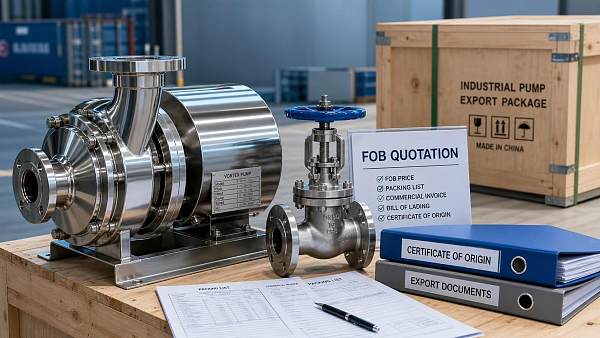
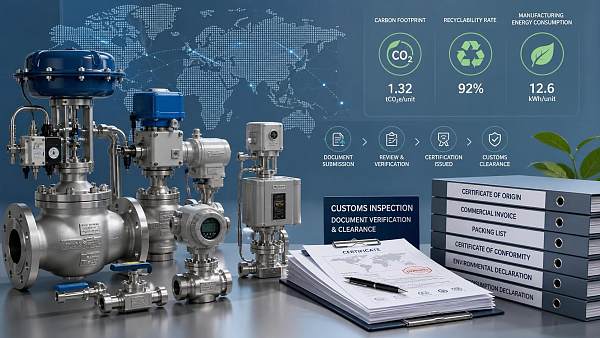
Starting July 1, 2026, U.S. Customs and Border Protection (CBP) began strengthening country-of-origin verification for industrial valves originating from China. This change is not merely a procedural adjustment in customs clearance; rather, it moves supply chain declarations and upstream document preparation forward into import compliance management. For businesses involving HS codes 8481.80 and 8481.90, importers, exporters, distribution channels, and supporting supply chain service providers all need to reassess document preparation, delivery schedules, and compliance costs. High-value-added categories such as control valves and actuators deserve particular attention.
The Verification Requirements Have Been Clearly Implemented
Confirmed information shows that U.S. CBP issued an emergency memorandum on June 30, 2026, and, starting July 1, 2026, implemented enhanced country-of-origin verification for industrial valves originating from China. The product scope involved includes HS codes 8481.80 and 8481.90. According to the summary, importers are required to submit a complete supply chain declaration and third-tier supplier documentation. The known direct impact is mainly reflected in customs clearance efficiency and compliance costs for European and U.S. distributors, with high-value-added categories such as control valves and actuators being more significantly affected.
The Impact Is Spreading from Customs Declaration to the Entire Business Chain
Import and Distribution Sides First Face Pressure for Document Traceability
From an industry perspective, importers and distributors that directly assume customs clearance responsibilities will be the first to experience the change. This is because the requirement is not limited to checking general trade information, but instead includes complete supply chain declarations and third-tier supplier documentation within the scope of country-of-origin verification materials. The business impact is mainly concentrated on customs declaration document preparation, document supplementation, customs clearance scheduling, and customer delivery commitments. For such companies, the current focus should be whether origin-related documents can be collected in advance, whether the documentation chain is complete, and whether different batches of goods can maintain consistent document logic.
Export Manufacturing Side Needs to Respond to More Detailed Traceability Requirements
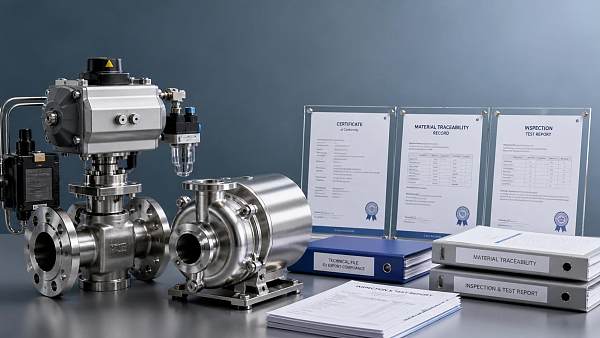
For industrial valve manufacturers supplying the U.S. market, the impact does not stop at the level of shipment certificates. From an analytical perspective, after CBP tightens its review, manufacturers may need to cooperate more systematically with downstream customers in providing supporting materials for supply chain declarations and respond to more detailed source traceability requirements. The business processes more significantly affected include order review, supplier data collection, factory document preparation, and consistency between technical and trade documents submitted externally. In particular, for high-value-added categories such as control valves and actuators, because order value and application requirements are usually subject to greater attention, document completeness and traceability are more likely to become key issues in transaction advancement.
Response Speed of Upstream Supporting Suppliers and Supply Chain Service Providers Becomes More Critical
From observation, the requirement for third-tier supplier documentation means that the impact will not remain only at the level of complete equipment or finished product exporters. Upstream supporting suppliers, as well as supply chain service providers assisting with customs declaration, logistics, and documentation affairs, also need to respond more quickly to downstream customers' requests for information retrieval. Business changes will mainly be reflected in document collaboration, version management, information consistency checks, and explanations of exceptional situations. If upstream materials are not provided in a timely manner, the actual pressure will be transmitted to delivery arrangements and customer communication.
Purchasers Will Pay More Attention to Supply Certainty
For purchasers, the first impact of this change is not a change in product standards themselves, but the risk of reduced certainty in procurement execution. From an analytical perspective, purchasers need to pay more attention to whether suppliers have the ability to stably provide origin-related documents, and whether key products may face timing uncertainties during customs declaration and delivery. For procurement activities that depend on project delivery or spare parts timeliness, document preparation capability is becoming a practical factor in evaluating supply stability.
Which Areas Need Earlier Preparation Now
Move Country-of-Origin Proof Capability Ahead of Order Acceptance and Shipment
From a practical perspective, what deserves greater attention for companies at present is that country-of-origin verification should not be understood as a temporary document supplementation matter after goods arrive at the port. According to the known requirements, complete supply chain declarations and third-tier supplier documentation have already become key content. Therefore, it is more appropriate to organize the relevant materials before order acceptance, stock preparation, and shipment. If the documentation system itself is incomplete, even if the products later meet shipment conditions, they may still face additional pressure in customs clearance and delivery.
Key Product Categories Should Simultaneously Check the Consistency Between Technical Documents and Trade Documents
High-value-added categories such as control valves and actuators have been explicitly mentioned as areas more significantly affected. From observation, these products usually involve more technical descriptions, configuration differences, and supply coordination. Therefore, companies need to pay attention to whether technical documents, packing information, supply chain declarations, and other trade documents remain consistent with each other. The current input information does not provide specific implementation details, so it is not possible to infer specific audit criteria from it. However, information consistency will clearly become a key area that companies need to manage in advance.
Delivery Cycles and Procurement Plans Need to Reserve a Compliance Buffer
From an analytical perspective, at the stage when the rules have just been implemented, companies should regard changes in customs clearance efficiency as an execution variable that requires focused monitoring. For exporters, distributors, and purchasers, a more practical approach is to re-examine delivery commitments, stock preparation arrangements, and procurement schedules, rather than directly applying previous delivery lead times to current business. Especially for orders that have already entered the execution stage, it is even more necessary to confirm whether the required documents can be retrieved and submitted in a timely manner.
Continue Monitoring Subsequent Positions Rather Than Drawing Premature Conclusions
Since the existing information only indicates that CBP has issued an emergency memorandum and launched enhanced country-of-origin verification, without providing more detailed public implementation positions, companies should maintain a clear sense of boundaries when making internal judgments. What can currently be confirmed is that the verification requirements have already been implemented. However, the depth of document requirements under different scenarios, the actual review pace, and market feedback still require ongoing observation of subsequent official statements and actual implementation.
This Is More Like a Clear Implementation Signal
From an editorial observation perspective, this information is more appropriately understood as an implementation change that has already taken effect, rather than a policy trend remaining at the discussion stage. The reason is that both the timing and the measures have been clarified, and the requirements directly fall on country-of-origin verification and supply chain document traceability. However, it is also not an event that can be simply summarized as having a “determined outcome,” because the currently available public input information does not cover more detailed implementation standards, review positions, and industry feedback. For market participants, what truly needs to be tracked at present is not only whether there are new requirements, but how these requirements will be specifically applied in customs declaration, procurement, delivery, and customer review.
For the Industry, the Focus Is That the Compliance Chain Is Being Moved Forward
Overall, CBP's tightening of country-of-origin verification for industrial valves made in China conveys a core change: compliance review is extending from a single customs declaration point to supply chain traceability management. For relevant companies, this is not simply an increase in information disclosure, but a higher requirement for document preparation depth, supply chain coordination capability, and delivery arrangements. At present, it is more appropriate to understand this information as a rule change that has already begun to be implemented, as well as a regulatory signal for which subsequent detailed positions, market feedback, and business adaptation still need to be continuously observed.
Basis of This Article and Follow-Up Verification Direction
This article was generated based on the information title, event occurrence time, and event summary provided by the user. The information used only includes: U.S. CBP issued an emergency memorandum on June 30, 2026; starting July 1, 2026, it implemented enhanced country-of-origin verification for industrial valves originating from China (HS codes 8481.80 and 8481.90); importers are required to submit a complete supply chain declaration and third-tier supplier documentation; and this has a direct impact on customs clearance efficiency and compliance costs for European and U.S. distributors. Such events usually also require continuous cross-verification with official announcements, regulatory agency releases, customs or trade authority information, industry association information, standards organization documents, and authoritative media reports. Since no specific official source links were provided in the input, relevant links and details still require continued follow-up verification. Matters worth continued observation include whether the implementation position will be further clarified, whether review requirements for key product categories will be refined, whether tendering and procurement documents will be adjusted accordingly, industry feedback, and actual corporate implementation.