


News
 China raises the export tax rebate rate for vortex pumps to 14%, affecting overseas procurement costs from October 2026Aug 17, 2026
- New EU Regulations Take Effect: EPD Declaration Required Before Customs Clearance for Imported Industrial ValvesAug 16, 2026
- The Strong Growth of Construction Machinery Exports Drives Rising Demand for Pump and Valve Supporting CertificationsAug 14, 2026
- The EU will implement dual-standard CE requirements for industrial valves starting in OctoberAug 13, 2026
- New Chinese Pump and Valve Export Regulations: EN 15714-2:2026 Compliance Declaration Required from SeptemberAug 12, 2026


EU to Upgrade Energy Efficiency Labeling Requirements for Industrial Pumps and Valves Starting in July
Starting from July 1, 2026, the European Union’s new round of revised ecodesign and energy efficiency labeling requirements for pump and valve products will officially take effect. This adjustment was implemented after the European Commission issued Regulation (EU) 2026/1389 on June 27, 2026, adding mandatory testing items for the dynamic leakage rate of control valves, actuator standby power consumption, and digital interface compatibility. For Chinese industrial pump and valve companies exporting to the EU, this is not only a change at the product parameter level, but also directly relates to market access procedures such as ErP certification updates, supporting CE compliance, and EPREL database registration. It deserves close attention from manufacturers, foreign trade enterprises, supply chain service providers, and procurement teams alike.
Which compliance thresholds are clarified in this revision
Confirmed information shows that the European Commission issued Regulation (EU) 2026/1389 on June 27, 2026, revising the current ecodesign and energy efficiency labeling requirements for pump and valve products, and that the regulation will officially take effect on July 1, 2026.
This revision adds three mandatory testing clauses, covering the dynamic leakage rate of control valves, actuator standby power consumption, and digital interface compatibility. At the same time, the new regulation will directly affect compliance access for industrial pump and valve products exported from China to the EU.
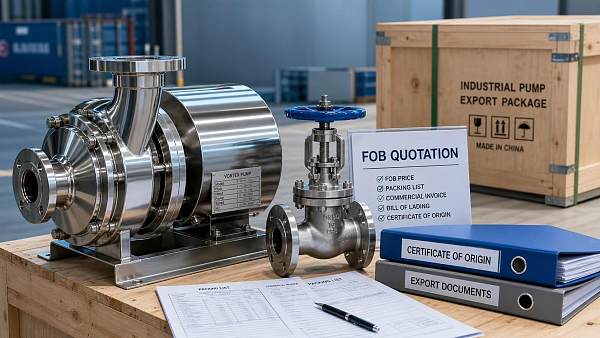
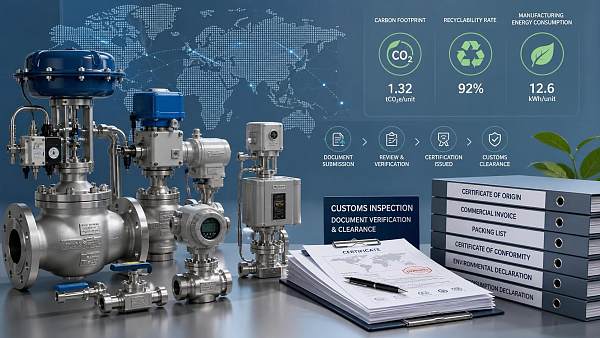
According to the information provided, relevant products that have not obtained the updated ErP certification and have not completed CE and EPREL database registration will face refusal of customs clearance.
The impact will first fall on EU-bound export business and compliance delivery processes
Exporters need to reassess the completeness of market access documentation
From an industry perspective, industrial pump and valve exporters that ship directly to the EU market will be the first to feel the change. The reason is that this revision does not remain at the level of label presentation, but further links testing requirements with access conditions. The impact is mainly reflected in certification preparation before customs declaration, matching of technical documents, and whether the products have completed EPREL registration.
What deserves greater attention at present is that companies cannot judge that their products can still enter the EU market under the original process solely based on existing certifications or previous shipping experience. In particular, they need to verify whether the updated ErP certification is fully aligned with CE and EPREL-related documentation.
Manufacturers will be pushed to review testing items and product configurations
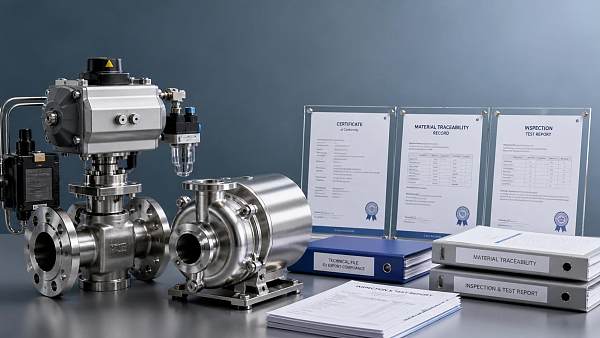
For processing and manufacturing companies, the newly added testing clauses mean that product design, component selection, and factory testing bases may need to be reviewed. From an analytical perspective, the dynamic leakage rate of control valves, actuator standby power consumption, and digital interface compatibility all directly correspond to product performance verification, rather than merely label adjustments at the sales end.
This type of impact will mainly fall on prototype testing, technical confirmation, compliance document output, and confirmation of delivery specifications with customers. For factories undertaking private labeling, OEM production, or parallel production of multiple models, which models are affected and which configurations require supplementary testing will become key points for near-term business judgment.
Risks in supply chain and customs clearance service processes will move further upstream
For supply chain service companies, customs declaration coordination parties, and service providers related to cross-border delivery, the changes brought by this new regulation are more concentrated in document review and delivery schedule control. Since products that have not completed the updated ErP certification and CE+EPREL registration may be refused customs clearance, the risk points are not only at the destination market, but will move forward to the shipment arrangement and customs clearance preparation stages.
From observation, service processes need to intervene earlier to check the corresponding compliance status of products, so as to avoid discovering documentation gaps only after shipment, which would affect delivery timing and customer acceptance arrangements.
Purchasers will pay more attention to suppliers’ ability to perform continuously
For purchasers related to the EU market or domestic supporting procurement departments, the implication of this information is that subsequent procurement decisions may no longer consider only price and delivery lead time, but also whether suppliers can provide certification and registration documents that meet the updated requirements. The impact will be more reflected in supplier admission, contract attachments, technical confirmation, and delivery communication.
From the perspective of business coordination, the change that the procurement side needs to focus on is not only whether a product can be ordered, but whether the supplier has the capability to perform stably under the updated rules.
Which practical issues need closer attention at the current stage
First distinguish that “regulatory effectiveness” and “business deliverability” are not the same thing
From an analytical perspective, the regulation has already taken effect on July 1, 2026, which is a clear fact. However, for daily business operations, what is more critical is whether specific products have completed the corresponding certification, registration, and documentation updates. The policy signal has been implemented, but that does not mean all existing models automatically meet the requirements.
Therefore, companies should currently focus on checking the delivery conditions of specific SKUs, models, or project orders, rather than staying only at the level of understanding the title of the regulation.
Focus on checking the linkage between the updated ErP certification and CE and EPREL
The information provided indicates that products that have not obtained the updated ErP certification and have not completed CE+EPREL database registration will be refused customs clearance. For business teams, this means that certification, labeling, registration information, and customs clearance documents cannot be disconnected from one another.
A more practical work priority is to sort through existing products on sale or pending shipment, confirm which products have already completed compliance actions corresponding to the updated requirements, and which still have gaps in documentation updates or registration.
Communication with customers and suppliers needs to move earlier
From observation, for orders involving the EU market, communication milestones need to be moved earlier than before. Whether between manufacturers and component suppliers, or between exporters and overseas customers, the testing items and document requirements affected by the new regulation should be confirmed as early as possible.
The reason for doing so is not abstract: once a product has gaps in certification or registration, the impact will not only be the supplementation of documents, but may also extend to shipment arrangements and customer receipt expectations.
Official wording and implementation interpretations still need to be continuously tracked
What is currently known includes the regulation number, publication date, effective date, newly added testing directions, and customs clearance consequences. For corporate practice, companies should continue to verify the official wording, implementation interpretations, and supporting requirements related to the updated rules, especially the parts involving specific product classification, registration details, and documentation presentation methods.
This type of tracking is not an additional action, but is intended to avoid directly applying principle-based requirements to all products, which could lead to internal judgments that are either too broad or too narrow.
This is more like a clear signal that access requirements are moving upstream
From an editorial observation perspective, this information first means that the EU’s management focus for industrial pump and valve products is extending further from traditional basic compliance requirements to more detailed performance testing and digital interface compatibility. For industry participants, what deserves attention is not “whether there is a new regulation,” but that the new regulation has already been directly linked to customs clearance outcomes.
In terms of judgment, this is not merely a conceptual policy signal that needs continued observation, because the effective date has already been clarified, and the consequences of failing to meet the updated ErP certification and CE+EPREL registration requirements have also been clarified. However, from an implementation perspective, it still belongs to an industry development that requires continuous tracking. In particular, companies still need to carefully verify how requirements for specific products, specific orders, and specific documents will be implemented.
The practical significance for the industry is that compliance thresholds have been transformed into delivery conditions
Overall, this information is more appropriately understood as an access change that has already entered the implementation stage, rather than a simple policy trend. The industry significance it releases is that the requirements industrial pumps and valves must meet to enter the EU market have further extended to coordinated management of testing items, labeling rules, and database registration.
For relevant companies, the most rational understanding at present is not to magnify its long-term consequences, but first to regard it as a practical condition that will directly affect EU-bound delivery, customs clearance, and customer performance arrangements. Before subsequent official information is further clarified, item-by-item verification around affected products, certification status, and registration documents remains the more prudent response direction.
Basis of this article and directions for subsequent verification
This article is generated based on the information title, event date, and event summary provided by the user. The core basis includes: the European Commission’s issuance of Regulation (EU) 2026/1389 on June 27, 2026; the regulation officially taking effect on July 1, 2026; the revision involving upgrades to ecodesign and energy efficiency labeling requirements for industrial pumps and valves; the addition of mandatory testing clauses for the dynamic leakage rate of control valves, actuator standby power consumption, and digital interface compatibility; and the fact that products that have not obtained the updated ErP certification and have not completed CE+EPREL database registration will be refused customs clearance.
For this type of information, continuous cross-verification should generally also be carried out in combination with official announcements, documents from standards organizations, corporate announcements, industry association information, and reports from authoritative media. Since no specific official source links were provided in the input information, this article does not further cite external links. Relevant implementation details, boundaries of applicable product categories, and subsequent official wording still need continued attention and verification.