


News
 China raises the export tax rebate rate for vortex pumps to 14%, affecting overseas procurement costs from October 2026Aug 17, 2026
- New EU Regulations Take Effect: EPD Declaration Required Before Customs Clearance for Imported Industrial ValvesAug 16, 2026
- The Strong Growth of Construction Machinery Exports Drives Rising Demand for Pump and Valve Supporting CertificationsAug 14, 2026
- The EU will implement dual-standard CE requirements for industrial valves starting in OctoberAug 13, 2026
- New Chinese Pump and Valve Export Regulations: EN 15714-2:2026 Compliance Declaration Required from SeptemberAug 12, 2026




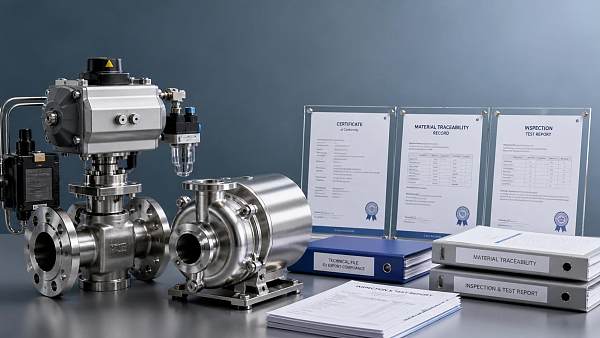
EN 14982:2026 comes into force,EMC requirements for industrial valve actuators tightened
On July 5,2026,the Official Journal of the European Union published the updated version EN 14982:2026,replacing the original 2015 edition,and clearly defined its scope of application as electromagnetic actuators matched with industrial process control valves sold to the EU。As this standard has been included in the mandatory reference list of the EU Declaration of Conformity,relevant products must follow the new version for CE certification from October 1,2026。This change deserves close attention from valve manufacturers,actuator suppliers,export enterprises,testing and certification service providers,as well as procurement and delivery processes,because it is directly related to testing requirements,technical document preparation and subsequent market access arrangements。
The new version of the standard has clearly entered the certification application stage
Confirmed information shows that the Official Journal of the European Union published the updated version of EN 14982:2026 on July 5,2026,and this version replaces the 2015 edition。The new standard is mandatorily applicable to all electromagnetic actuators matched with industrial process control valves sold to the EU。
In terms of content changes,the new version substantially raises the immunity test level,with a focus on tests related to variable-frequency interference and broadband transient pulses,while adding wireless coexistence assessment clauses。
At the level of certification application,this standard has been included in the mandatory reference list of the EU Declaration of Conformity。This means that from October 1,2026,CE certification for relevant products must be carried out in accordance with EN 14982:2026。
The impact is not limited to the testing stage
Export and order acceptance processes face pressure to switch documentation
From an industry perspective,export enterprises supplying the EU market will be affected first,because the change of standard version has already been directly linked to the reference requirements for CE certification。The impact is mainly reflected in order acceptance,certification document matching,pre-delivery compliance checks and other processes。For relevant enterprises,the current focus should be on the compliance documents corresponding to the products,the standard version cited in declarations,and whether existing projects involve re-assessment under the new version requirements。
Manufacturing and integration parties need to re-examine technical matching
For industrial valve manufacturers,electromagnetic actuator producers and enterprises engaged in system integration,the impact does not remain only at the sample submission and testing level。Because the immunity test level has been tightened,and wireless coexistence assessment clauses have been added,enterprises may need to make synchronized adjustments in product selection,matching relationships,technical document preparation and pre-factory verification。From an analytical perspective,such changes may be further transmitted to technical agreements,tender response documents and updates to customer acceptance criteria。
The testing and certification service chain will pay more attention to the reference approach of the new version
Certification-related enterprises and testing service institutions will also directly face changes in rules。The reason is that the new version of the standard has entered the mandatory reference scope of the EU Declaration of Conformity,and relevant service work needs to be carried out around the new version clauses。The impact is mainly reflected in test plan arrangements,report reference basis,technical document review and certification schedule coordination。For enterprises commissioning testing,what currently deserves more attention is whether existing reports still meet subsequent use scenarios,and whether document preparation and certification scheduling during the transition between the old and new versions will affect the shipping rhythm。
Procurement and delivery arrangements need to consider compliance validity at the same time
Purchasers,channel distribution enterprises and supply chain service enterprises also need to pay attention to this adjustment。Because once CE certification must be carried out according to the new version,procurement decisions cannot consider only price and delivery time,but must also verify the adaptation status of the standard version for the supplier's corresponding products。Based on observation,this will affect supplier qualification verification,arrival acceptance documents,project delivery schedule arrangements and the completeness of subsequent after-sales traceability documents。
Practical changes that enterprises should watch more closely at present
First check certification documents and the versions cited in declarations
For enterprises that have already deployed in the EU market,the priority is to check the standard versions cited in the existing EU Declaration of Conformity and related technical documents。From an analytical perspective,after the standard has been included in the mandatory reference list,whether the document references remain consistent with the new version will be directly related to subsequent certification applicability and shipping compliance。
Assess as soon as possible whether test items need to be supplemented
Because the confirmed new changes include tightened immunity test levels and newly added wireless coexistence assessment clauses,enterprises need to focus on whether the existing test coverage can correspond to the new version requirements。The input information does not provide more detailed implementation clauses or technical judgment criteria,so it is currently more appropriate to understand this as a need to organize internal assessment as soon as possible,rather than assuming that existing test results can naturally continue to be used。
Move the review of procurement and delivery plans forward
From October 1,2026,CE certification for relevant products must be carried out in accordance with the new version。For enterprises with many orders on hand,planned shipment projects and stocking arrangements,what deserves attention is the connection among certification scheduling,testing preparation,supplier cooperation and delivery timing。Based on observation,if the procurement and project management sides do not update requirements simultaneously,there may later be pressure to supplement documents or switch certification at delivery milestones。
Pay attention to updates of tender documents and customer technical requirements
For enterprises participating in industrial project bidding,complete equipment supply or long-term framework supply,whether tender documents,technical agreements and customer acceptance conditions follow up with the new version of the standard is a practical issue that needs continuous tracking next。The current input information does not provide specific market implementation rules,so this part should still be regarded as a business change that needs observation,rather than a result that has already been uniformly implemented。
This is more like a clear implementation signal
Based on observation,this information is more appropriately understood as a rule change that has entered the implementation stage,rather than a development remaining at the level of consultation or principle discussion。The reasons are clear:first,the old version has been replaced by the new version,second,the new version has entered the mandatory reference list of the EU Declaration of Conformity,and third,CE certification must be carried out according to the new version from October 1,2026。
On the other hand,from an analytical perspective,the industry still needs to continue paying attention to subsequent implementation criteria,especially testing implementation details,certification audit practices,the pace of customer technical document updates and market feedback。In other words,the implementation of the rules itself is already clear,while the real business impact will gradually emerge along with certification arrangements and project execution。
Practical implications for market participants
Overall,the official entry into force of EN 14982:2026 is not only an update of a standard number,but a direct tightening of EMC testing requirements in EU market access conditions。It first affects electromagnetic actuators matched with industrial process control valves sold to the EU,but will further be transmitted to export,procurement,testing,certification,project delivery and after-sales traceability processes。
At present,it is more appropriate to understand this information as a clear compliance transition point and implementation signal。For relevant enterprises,the focus is not on amplifying its impact,but on checking the certification basis,test coverage and delivery document preparation status as soon as possible,while continuing to observe subsequent implementation criteria and market-side feedback。
Basis of this article and directions for subsequent verification
The content of this article is generated based on the information title,event occurrence time and event summary provided by the user。The information used is limited to the publication of the updated version of EN 14982:2026,replacement of the 2015 edition,application to electromagnetic actuators matched with industrial process control valves sold to the EU,tightening of immunity test levels,addition of wireless coexistence assessment clauses,inclusion in the mandatory reference list of the EU Declaration of Conformity,and the requirement that CE certification must be carried out according to the new version from October 1,2026。
For this type of event,continuous verification should usually also be conducted in combination with official announcements,regulatory authority publications,standard organization documents,industry association information,trade and certification-related notifications,and authoritative media reports。Because no specific official source links are provided in the input,this article does not list corresponding links。Follow-up tracking is still needed for the formal text,certification implementation criteria,changes in tender documents,industry feedback and the actual implementation status of enterprises。